
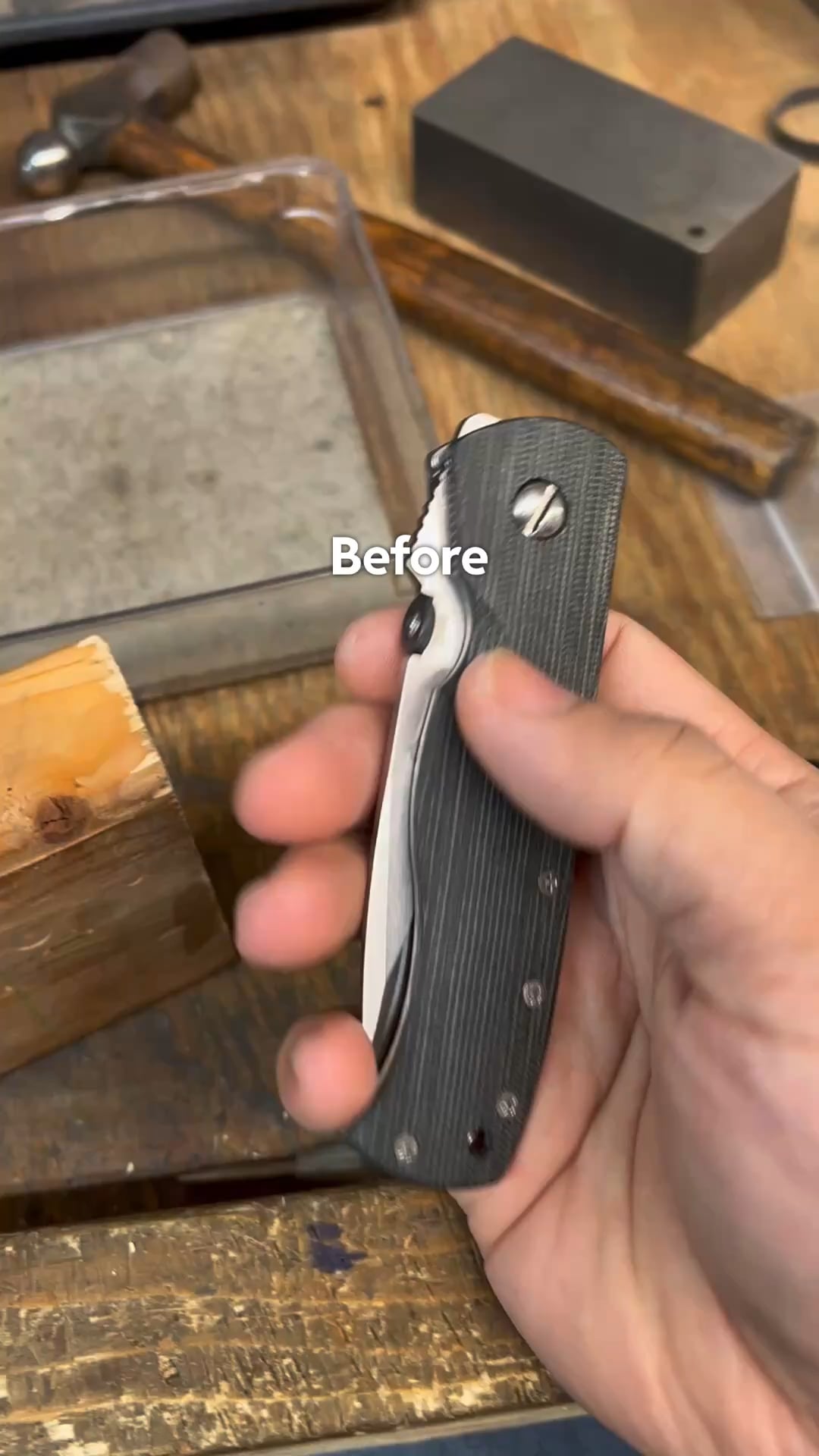
I had to make a bigger stop pin to compensate the ground away material. 9 out of 10 times, lock failures happen from bad lock geometry. There’s only around 1-2 degrees that separates lock failure from a secured lock so it’s an easy mistake to make. As you can see the lock up percentage isn’t nearly as important to the safety of the knife as perceived (too early can be unsafe from the meat of the fingers wedging between the scales to unlock). The magic number is around 7 degrees for liner and frame locks. If it’s lower then you get lock stick, if it’s higher you get lock slip. Though I’ve had to recut some locks as low as 3 degrees to get a secure lock when they have a steel insert.
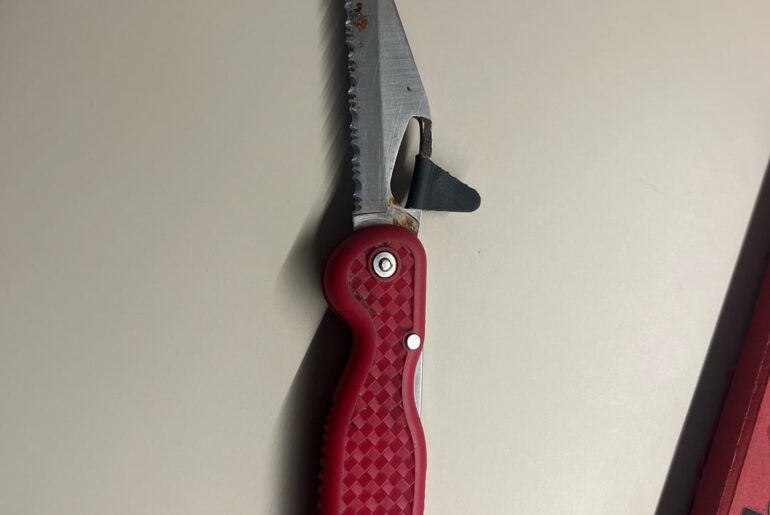
I know some people will say “you’re not suppose to use your knife like that” while that is true. I’ve owned some liner and frame locks that were bad enough that they pop from thumb pressure alone and I’ve been cut from lock failures. I treat my locking folders very differently from my non-locking folders. So at end of the day, it’s best not to have a locking knife that identifies as a slipjoint.
by noodlebowie
1 Comment
I’m a firm believer that knife locks should work. It’s not rocket science and they should hold up to impacts. Cool to see you taking matters into your own hands, as Emerson doesn’t seem to do a great job with lock geometry.
Your point about the engagement angle is dead-on. The hypothetical value depends on the friction coefficient between the two materials locking up, but IIRC 7 degrees is about right for titanium on steel contact, and it’ll change for a steel on steel interface.