

Get Autoblog in your Google feed
The 2026 Nissan Frontier and 2026 Toyota Tacoma start $295 apart before destination charges, and the reliability question between them usually gets settled by reputation rather than by the data, which points somewhere else.
If you plan to keep the truck long enough for defects to cost you more than depreciation, the Frontier is the better bet. If you expect to sell inside five or six years, the Tacoma’s resale advantage settles it regardless of the reliability scores.
Nissan Frontier vs Toyota Tacoma: Key Differences at a Glance
Frontier: 87/100 quality and reliability, 2nd in segment, one recall, 3.8-liter V6 unchanged since launch
Tacoma: 80/100 quality and reliability, 4th in segment, holds the 2026 dependability award, best-in-class resale
The Frontier S carries a base MSRP of $32,150 and the Tacoma SR $32,445, both before delivery. Toyota adds $1,745 for midsize pickups, higher in ten southern states, while Nissan excludes up to $2,245 in destination and handling. Every Frontier runs a naturally aspirated 3.8-liter V6 making 310 horsepower through a nine-speed automatic. Every Tacoma runs a turbocharged 2.4-liter four making 278 horsepower and 317 lb-ft, with an available i-FORCE MAX hybrid at 326 horsepower and 465 lb-ft.
 2026 Nissan Frontier
Nissan
 2026 Toyota Tacoma TRD Off-Road
Toyota
What The Dependability Award Actually Measures
The J.D. Power 2026 U.S. Vehicle Dependability Study surveyed 33,268 original owners of 2023 model-year vehicles, and the Tacoma took the midsize pickup award.
A 2023 Tacoma is the previous generation, riding on the platform Toyota replaced in 2024 and powered by the naturally aspirated 3.5-liter V6 the truck no longer offers, so the award describes hardware that left production before the current truck reached dealers. Industry-wide dependability also worsened by two problems per 100 vehicles in the same study.
The Same Company Scores The Frontier Higher
J.D. Power’s 100-point consumer ratings cover the current model year and measure defects, malfunctions, and design flaws across the whole vehicle, infotainment included.
J.D. Power 2026FrontierTacomaOverall8381Quality & Reliability87 (Great)80 (Average)Resale83 (Great)96 (Best)Driving Experience7473Dealership Experience8576
Those totals put the Tacoma fourth in the segment, tied with the Honda Ridgeline. The Chevrolet Colorado leads on 84, the Frontier sits second on 83 with the GMC Canyon and Jeep Gladiator, and the Hyundai Santa Cruz and Ford Maverick both land on 82, ahead of the truck holding the dependability award.
Which Truck Has Been Recalled More Since Its Redesign?
Consumer Reports predicted the 2025 Tacoma would be less reliable than the average new car, and NHTSA recalled that model year three times. The largest campaign covered 5,960 trucks with front driveshaft constant-velocity joints that could deform and break, risking impaired steering and rollaway on full-time four-wheel-drive trucks parked without the brake applied.
The 2026 truck looks better. Consumer Reports now expects it to beat the average, on 2024 and 2025 owner data, and no recalls have been issued against it so far.
The Frontier’s record runs steadier over a longer window. Consumer Reports expects the 2026 Frontier to beat the average as well, on three model years of data rather than two. Its single 2026 recall covers improperly welded door strikers, a campaign shared with the Altima, Sentra, and Kicks, unrelated to the truck’s chassis or powertrain.
How Long Each Engine Has Been In Service
Toyota’s 2024 redesign swapped the V6 for the turbocharged 2.4-liter four. The engine is not experimental, since the i-FORCE family arrived in the Tundra first, but owner data on it in this truck covers roughly two model years.
The Frontier’s 3.8-liter V6 and nine-speed automatic have been in service since the current generation launched, and nothing mechanical changed for 2026. Five model years of owner reporting sit behind that powertrain, which is the most plausible explanation for the 87.
Resale Is Where Toyota Wins It Back
CarEdge projects the Tacoma at 22 percent depreciation over five years, retaining $34,806 of a $44,395 purchase. The Frontier lands at 37 percent, retaining $26,539 of $41,906. That is a $5,778 swing on trucks whose base prices sit $295 apart, and iSeeCars rates the Tacoma the slowest-depreciating pickup on sale.
Insurance leans the same way, at roughly $2,050 a year for the Tacoma against $2,350 for the Frontier.
What The Sales Numbers Do And Do Not Show
Nissan reported Frontier retail sales up 36.8 percent year over year in the second quarter of 2026, and attributed the gain to demand for value and consistent quality in the segment. That explanation is Nissan’s own, and volume responds to pricing, incentives, and inventory as much as to anything owners report about defects. The Tacoma still outsells the Frontier by a wide margin.
Which One Is for You
 2026 Nissan Frontier Pro 4X By Roush
Nissan
Buy the Frontier if…Buy the Tacoma if…Ownership lengthYou keep trucks a decade or moreYou trade out inside five or six yearsPowertrain riskYou want five years of owner data behind the engineYou accept two years of data on a turbo fourRecall exposureYou want the cleaner record since redesignYou can live with three 2025 campaignsResaleYou are not planning to sellYou want the segment’s best residualCapabilityThe V6 covers your towingYou need the hybrid’s 465 lb-ft or the manual
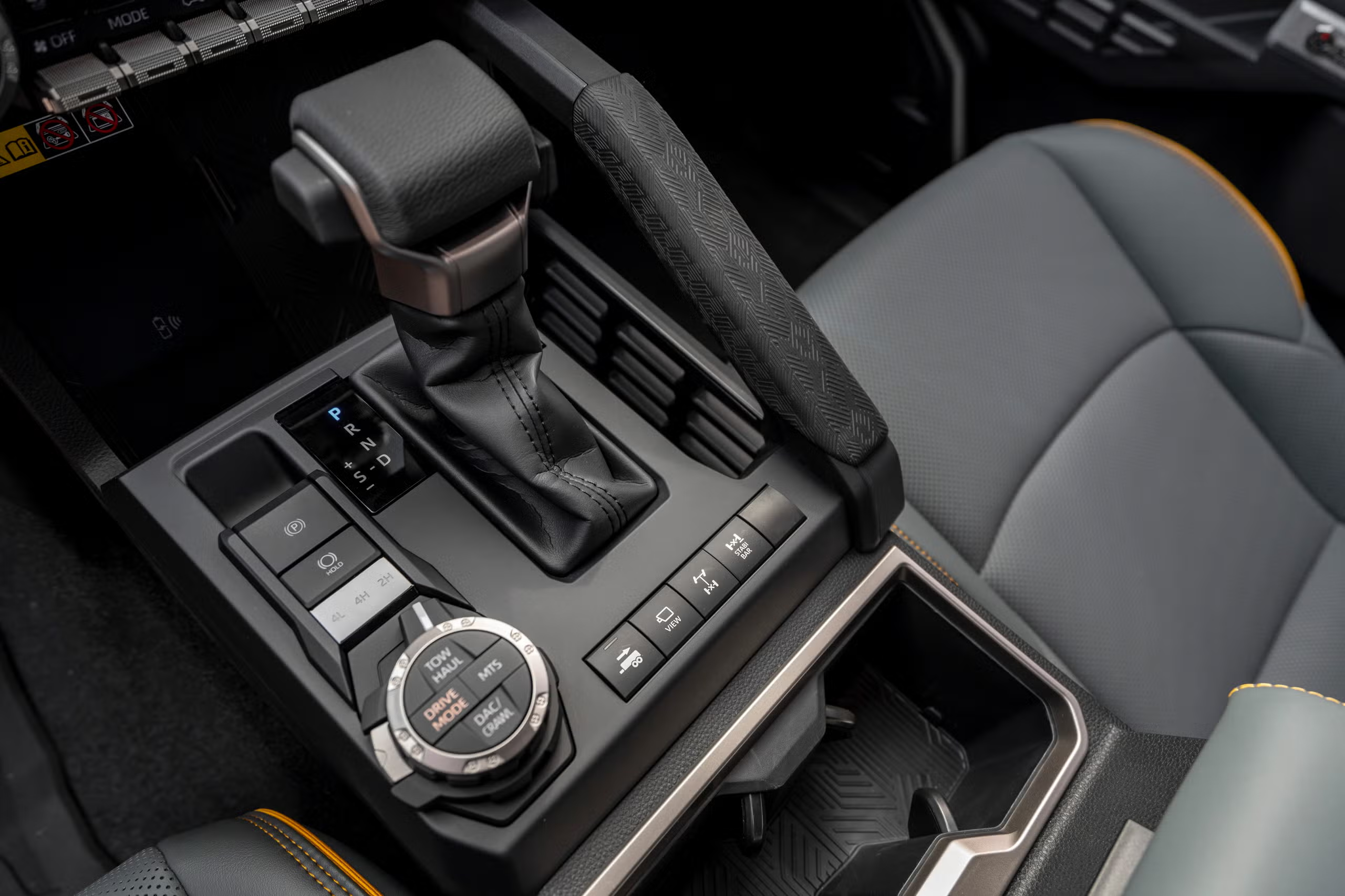
 2025-2026 Toyota Tacoma TRD Pro black interior

Reliability and residual value get treated as the same thing in this segment, and separating them produces a cleaner answer than either truck’s reputation does. Current owners report fewer problems with the Frontier, while the Tacoma returns $5,778 more at the five-year mark, which is the number that decides it for anyone who does not intend to keep the truck that long.
About the author
Co-Editor-in-Chief, Autoblog
Adam Lynton is Co-Editor-in-Chief at Autoblog with over 15 years of automotive journalism experience. A member of the Automotive Press Association and International Motor Press Association, Adam specializes in vehicle reviews and industry analysis, blending deep car culture roots with a global editorial perspective.