
Make us your preferred source on GoogleNavara Diesel vs Navara PHEV: Same badge, completely different ute – we dig into the differences between fifth- and sixth-gen utesThe News
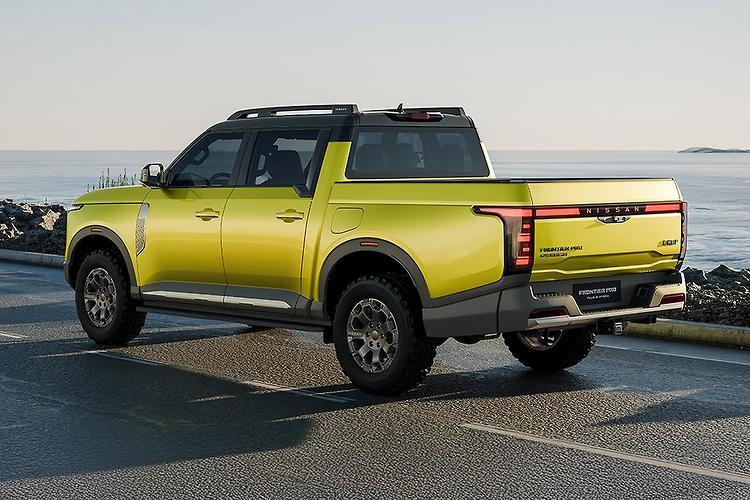
From 2027, Nissan dealers will have two very different utes wearing the Navara badge. One is a Triton-based diesel workhorse built in Thailand. The other is a high-tech Chinese-built plug-in hybrid with more than double the power and an engine chosen for Aussie buyers.
The Navara’s ‘big’ brother ditches diesel for a petrol-electric powertrain, plus it’s almost certainly going to be longer, wider and taller, and has nearly 70 per cent more torque. The burning question is will it achieve the same capability metrics as the diesel Navara?
The Key Details
Fifth-generation diesel Navara based on a Triton ute
Sixth-generation PHEV Navara based on Frontier Pro from China
PHEV makes 300kW/800Nm vs 150kW/470Nm for the diesel
Both claim 3500kg braked towing
Navara diesel starts at $53,348 plus ORCs, while PHEV pricing is TBA
 Nissan Navara Pro Plug-in HybridThe Finer Details
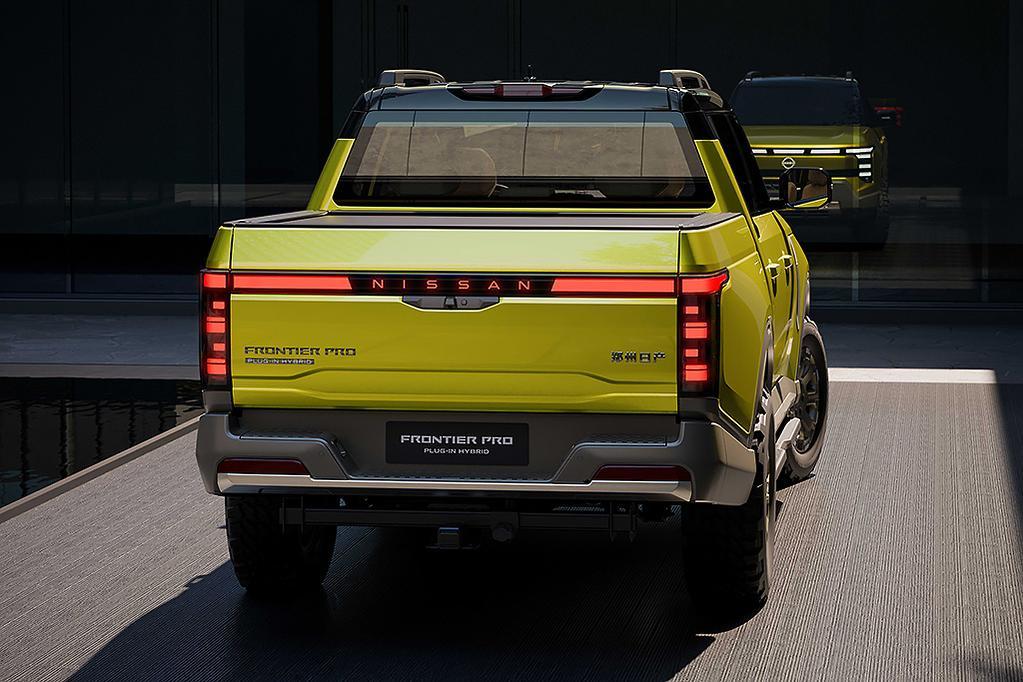
The Navara Pro PHEV is based on the China-market Frontier Pro and was developed with Nissan’s partners in China, Dongfeng.
So there’s no shared engine, no shared gearbox and no Mitsubishi in sight.
It’s also bigger in every direction. Think of them as two utes that happen to wear the same badge.
Unlike the diesel, which was signed off with Mitsubishi doing the heavy lifting, this PHEV has no Mitsubishi DNA at all.
 Mitsubishi Triton
 Nissan Navara Pro Plug-in Hybrid (Prototype)
Indeed, the two Navaras come from different family trees.
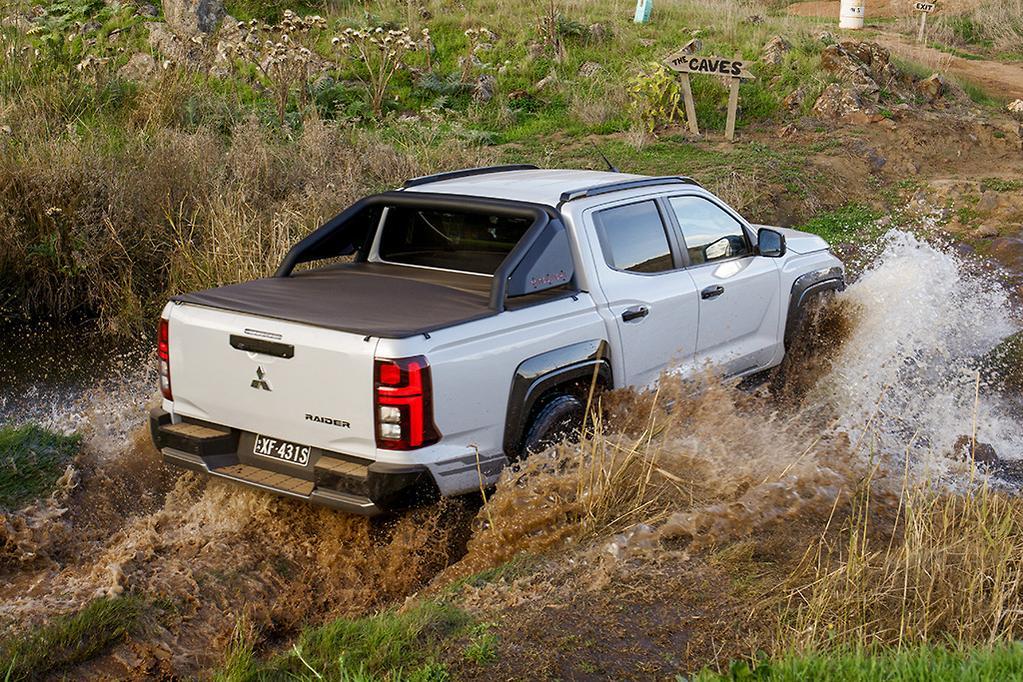
When Nissan replaced the D23, it went to its alliance partner Mitsubishi. The D27 is a restyled Triton with a local suspension tune from Premcar. It’s sold only as a 4×4 dual-cab auto, priced from $53,348 for the SL to $68,418 for the Pro-4X, before on-road costs.
The Navara Pro PHEV comes from Nissan’s light commercial vehicle development centre in Zhengzhou, China. Teams from Nissan Australia, Nissan in Japan and joint-venture partner Zhengzhou Nissan all worked on the program.
Nissan calls it the sixth generation of the Navara nameplate.
 Mitsubishi Triton
 Fifth-generation D27 Nissan Navara ute
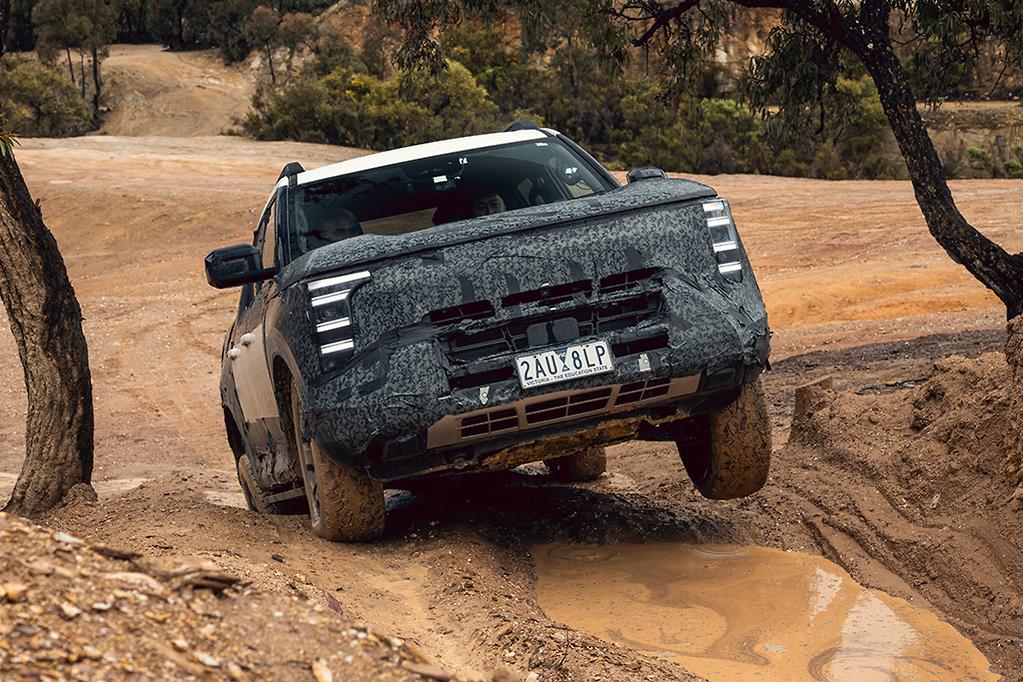
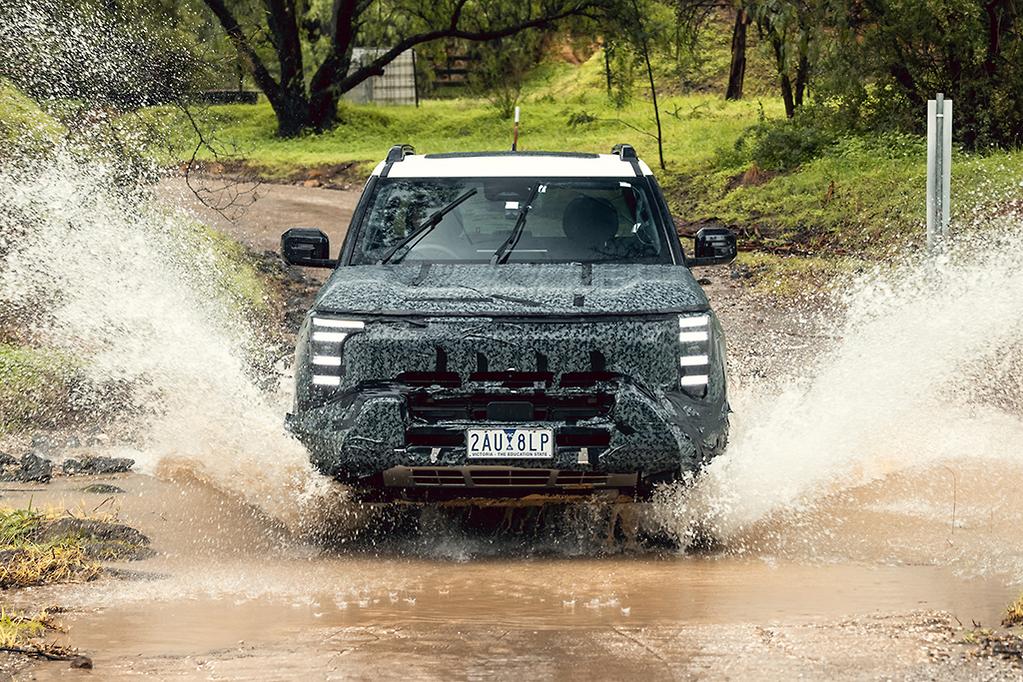
Even the styling borrows from Nissan rather than Mitsubishi.
Three horizontal LED strips above the grille nod to the three-slot bonnet opening on the 1980s D21 Hardbody Navara.
How they compare:
?
Navara diesel (D27)
Navara Pro PHEV
Price (plus ORCs)?
$53,348–$68,418
TBA
Engine?
2.4L twin-turbo diesel
2.0L turbo-petrol PHEV
Power?
150kW
300kW*
Torque?
470Nm
800Nm*
Fuel use
7.7L/100km
6.9L/100km^
Transmission?
6-speed auto
8-speed auto w/ e-motor
Length?
5320mm
5494mm^
Width?
1865mm
1960mm^
Height?
1815mm
1950mm^
Wheelbase?
3130mm
3300mm^
Kerb weight?
2226kg (Pro-4X)
2500–2540kg^
Braked towing?
3500kg
3500kg*
Payload?
964kg (Pro-4X)
Up to 1000kg*
Rear suspension?
Leaf springs
TBA
Battery / EV range?
N/A
TBA
*Preliminary, subject to final homologation.
^China-market Nissan Frontier Pro PHEV (1.5L) figures; Australian-spec may differ
The 2027 Nissan Navara Pro PHEV’s 2.0-litre turbo-petrol and high-output electric motor – which are combined into an eight-speed auto – make 300kW and 800Nm.
That’s twice the diesel’s power and 330Nm more torque. Put another way, it’s like giving the Navara a second engine. Which, technically, is what Nissan has done.
Fuel consumption is another unknown because the 6.9L/100km figure is from the Chinese market Nissan Frontier Pro PHEV, which runs a smaller 1.5-litre petrol four-pot engine.
Size matters
Park the two side by side and the Pro PHEV makes the regular Navara look like the runt of the family.
Going by the China-market Frontier Pro PHEV – which is what has been undergoing testing in Australia – the newcomer is 5494mm long, 1960mm wide and 1950mm tall, on a 3300mm wheelbase.
Based on the data in the table, that makes the PHEV 174mm longer, 95mm wider and 135mm taller, with 170mm more between the front and rear wheels.
The tub is a different story. The Chinese PHEV’s tray measures 1520mm long, 1600mm wide and 490mm deep. The diesel’s is 1555mm long, 1545mm wide and 525mm deep. So the diesel’s tub is a bit longer and deeper, while the PHEV’s is wider.
 Nissan Navara Pro Plug-in Hybrid (Prototype)Heavy lifting
On paper, both utes match up in terms of load bearing capability. The diesel Navara Pro-4X tows 3500kg braked and is rated for 964kg of payload. Nissan says the PHEV will also tow 3500kg and carry up to 1000kg, but both figures for the PHEV are still subject to final homologation.
Those figures are worth watching.
The China-market Frontier Pro PHEV weighs 2500–2540kg, around 300kg more than the diesel Pro-4X’s 2226kg. That model uses the smaller 1.5-litre engine, so the Aussie-spec ute’s final weight is still unknown, but may go closer to 2600kg.
Nissan hasn’t confirmed the battery size either. Batteries are heavy and payload is GVM minus kerb mass. Every extra kilo of ute is a kilo you can’t put in the tray.
 Nissan Navara Pro Plug-in HybridOff-road and underneath
Both utes have dual-range 4×4 and a locking rear diff. The diesel Navara has a six-speed auto and leaf springs at the rear, after Nissan dropped the old D23’s coils.
The PHEV has a mechanical 4×4 system and an eight-speed auto with low-range crawling.
Nissan has tested front, rear and combined diff-lock set-ups and settled on a rear diff lock for now. The rear suspension is still undecided for the Navara Pro PHEV. Nissan has tested both leaf springs and multi-link coils and will confirm its choice closer to launch.
The Aussie test program has been thorough (20,000km thus far) and testing has covered suspension, tyres, driver-assist calibration, terrain modes and towing.
 Nissan Navara Pro Plug-in Hybrid (Prototype)Cabin and kit
The diesel Navara has a 9.0-inch touchscreen. The PHEV aims higher. Nissan says it can have a large central touchscreen, a digital instrument cluster, a panoramic sunroof and heated and ventilated front seats, depending on grade. Vehicle-to-load (V2L) is also available.
 Nissan Navara Pro Plug-in HybridThe Road Ahead
Nissan needs both Navaras to work hard in showrooms. September 2026 VFACTS data shows combined Navara sales are down 48.1 per cent year-to-date to just 3227 – although that’s without 4×2 models now.
Pricing will decide a lot. The plug-in ute field already runs from the JAC Hunter PHEV at $49,888 to the Shark 6 at $57,900, the GWM Cannon Alpha PHEV at $61,490 and the Ford Ranger PHEV at $61,000, all plus on-road costs.
If the Navara Pro PHEV lands close to the diesel Pro-4X’s $68,418, it will look like a lot of ute for the money. If it drifts much higher, the regular Navara could end up as Nissan’s bargain option.
 Nissan Navara Pro Plug-in HybridOur team of independent expert car reviewers and journalistsMeet the team