
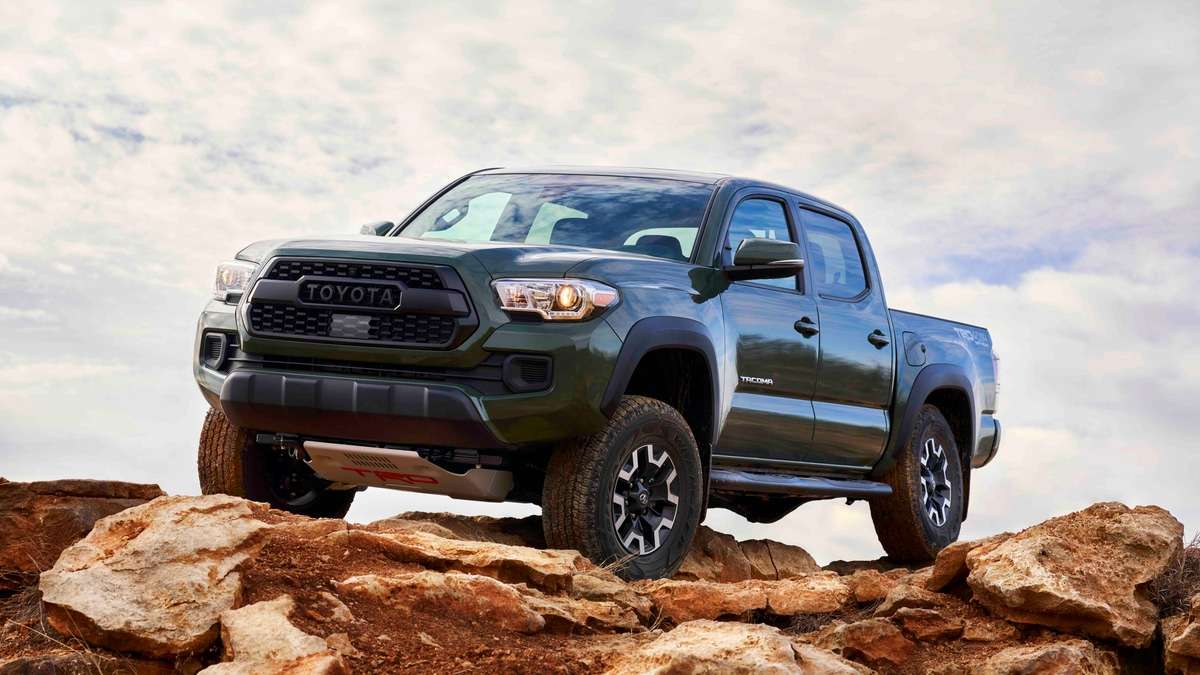
While changing the oil on his 2021 Toyota Tacoma TRD Off-Road, a buyer noticed what looked like cutting or welding on a crossmember beneath the front of the truck. He had bought it from Carvana eight months earlier with a clean title, no reported accidents, and what he says was a 150-point inspection.
That discovery raises a question any used-truck buyer can ask: was a suspension lift installed and later removed? Rough Country’s instructions for a large Tacoma lift require cutting a factory crossmember. Returning the truck to a stock-looking height would not undo that cut.

The owner, posting as FunnyTexan in a Reddit thread, described finding “what looks like a prior weld job or some type of breaking of the front suspension crossmember.”
The Marks That Raised the Owner’s Concern
In the owner’s photograph, a transverse member beneath the drivetrain has two areas circled in orange. An irregular line is visible across the center area. The image gives a mechanic a place to look, but it does not identify the part’s history or establish whether a repair was sound.
Commenters suggested both a removed drop-bracket lift and collision damage. The photograph alone cannot choose between them. A shop can compare the front suspension with the correct factory layout and name the parts that differ.
A Lift Can Leave Permanent Changes Behind
Rough Country’s current six-inch Tacoma lift page covers 2016–2023 trucks. It says the job requires cutting and drilling and includes replacement front and rear crossmembers.
The manufacturer’s 921758200B installation document is for 2016–17 Tacomas, rather than this owner’s 2021 truck, but it shows why the cutting matters. Step 29 directs the installer to cut a factory crossmember in the front suspension so the front differential can sit lower. The kit supplies new crossmembers.

Advertising
The instructions call this the “rear” crossmember because it sits behind another member in the front suspension. It is not a reference to the truck’s rear axle. That location matters when a technician compares photographs with the factory arrangement.
A lift provides a plausible reason for a cut without any crash. No one in the thread documented a specific kit on this Tacoma, and a mechanic would need to identify the part and examine the truck to explain the marks.
If someone later removes the taller suspension parts, the truck may look stock again while a cut factory member remains. Ask what was installed, what came off, and whether altered factory components were replaced.
What a Clean History Report Can Miss
“Yup, on the purchase agreement it says there is no indicated frame or structural damage,” FunnyTexan wrote in a follow-up comment.
Carvana’s current certified-program page says its vehicles have no reported accidents, fire, frame, or flood damage in CARFAX and AutoCheck. It also cautions that information may never have been reported to those services. A clean report cannot show every prior modification.
Carvana’s publicly linked 150-point checklist includes suspension ride height, bushings, ball joints, tie rods, drivetrain vibration, and steering alignment. A buyer can ask for the completed checklist and any reconditioning records to see what the seller actually checked or repaired on this truck.
Inspect the Truck Before the Return Window Closes
The Federal Trade Commission recommends an independent mechanical inspection even for a certified or dealer-inspected used vehicle. It advises a written report with repair estimates. For a delivered truck, book the appointment early enough to act within the seller’s written return terms.
Give the shop a sharper assignment than “check the frame.” Ask for a comparison of the front suspension and differential mounts with the correct model-year factory setup. Request photographs of any nonfactory cuts, welds, brackets, holes, or replacement crossmembers, plus clues that a lift was installed and removed.
Have the technician name each questioned part and say whether a change is directly visible or only suspected. The written report should explain whether more structural or suspension work is needed. A clean alignment result cannot explain a cut crossmember.
Compare that report with the listing, seller inspection, and any repair invoices. If the truck was described as returned to stock, ask which factory components were replaced. Save the listing and delivery photographs while they are available.
Advertising
If the shop flags a structural or suspension concern, ask whether the truck should be driven and what assessment the identified part needs. Get the answer in writing before putting more miles on it.
Carvana Opened an Investigation, the Owner Says
The owner said Carvana recommended a professional diagnosis and initially questioned what could be established eight months after purchase. In a later comment, he said an executive resolution case manager opened an investigation and scheduled a call.
The available thread does not include the mechanic’s diagnosis or a final outcome. Nor does it establish what Carvana knew before the sale. Those open questions matter to this owner; the next buyer can act sooner by arranging an inspection within the return window.
A Tacoma that looks close to stock can carry signs of a previous build underneath. Check the hardware against the factory configuration and ask for the records that explain any changes. That gives you something firmer than a clean report when you decide whether to keep the truck.
Has an inspection of a used truck you considered found evidence of a removed lift? Which component gave it away?
Two photos by u/FunnyTexan
About The Author
Noah Washington is an automotive journalist based in Atlanta, Georgia, covering sports cars, luxury vehicles, and performance culture. His reporting focuses on explaining the engineering, design philosophy, and real-world ownership experience behind modern vehicles.
Noah has been immersed in the automotive world since his early teens, attending industry events and following the enthusiast communities that shape how cars are built and driven today. His work blends industry insight with enthusiastic storytelling, helping readers understand not just what a car is, but why it matters.
Noah is also a member of the Southeast Automotive Media Association (SAMA), a professional organization for automotive journalists and industry media in the Southeast.
His coverage regularly explores sports cars, luxury vehicles, and performance-driven segments of the automotive industry, including the evolving culture surrounding Formula Drift and enthusiast builds.
Read more of Noah’s work on his author profile page.
You can also follow Noah here:
Follow us today…


