
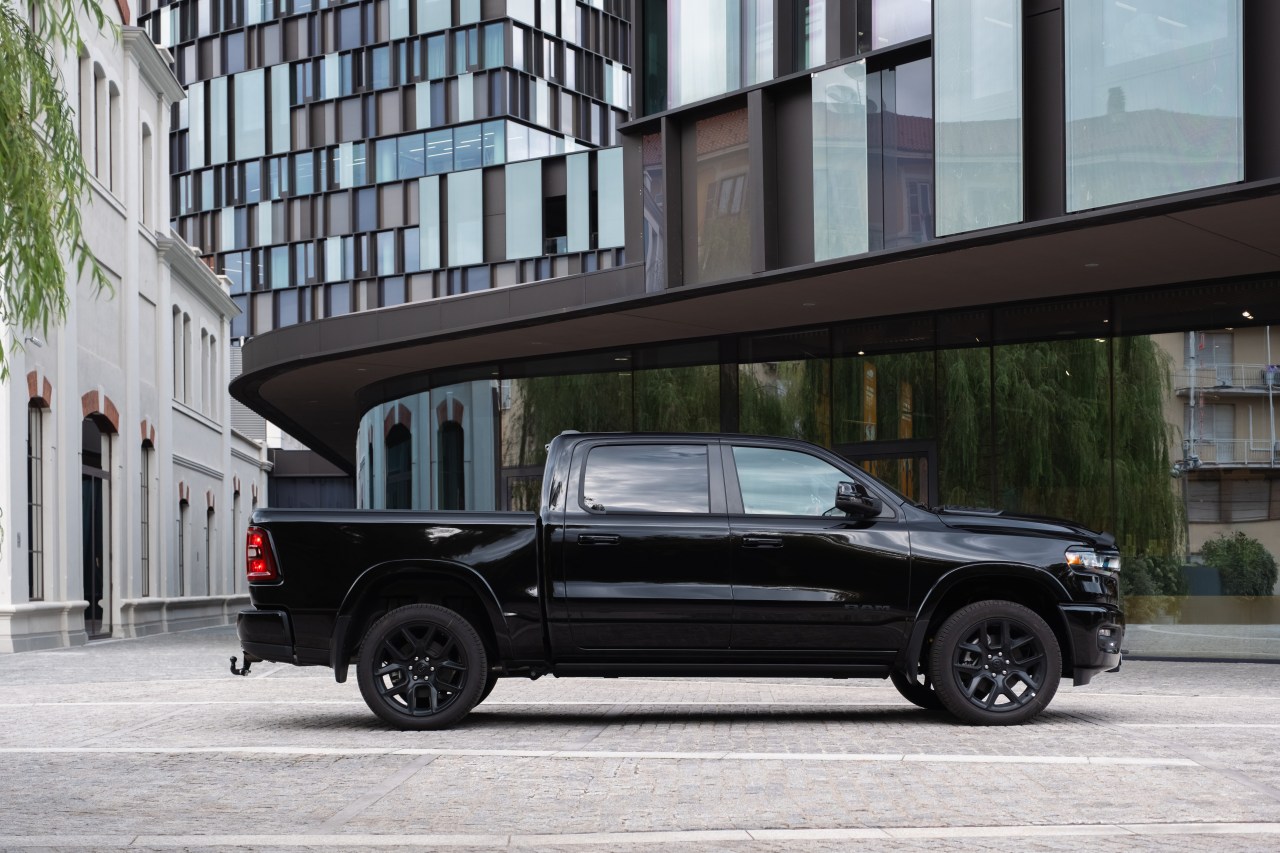
(TestMiles) – Owners of certain 2019–2026 Ram 1500 pickups need a free dealer inspection because a rear seat-belt anchor may not hold correctly in a crash.
A huge recall with a narrowly defined defect
More than 1.27 million Ram 1500 pickup trucks in the United States are being recalled because one or more second-row seat-belt buckle anchors may not have been properly attached to the truck’s body structure during assembly.
The action covers certain 2019 through 2026 model-year Ram 1500s built between February 17, 2018, and April 27, 2026. It is identified as National Highway Traffic Safety Administration campaign 26V495 and FCA US recall 67D.
The number is enormous, but it needs context. FCA US estimates that 0.1% of the recalled population actually has the condition. Applied to the 1,271,294 U.S. vehicles in the campaign, that estimate works out to about 1,271 pickups. The broad population is being called in because the potentially affected trucks cannot be identified reliably without inspection.
The recall is not a warning that every seat belt in every covered truck is defective. It concerns the attachment of the second-row center or driver-side buckle anchor to the body. The front restraints are not the focus of this campaign.
Why an anchor bolt matters in a crash
A seat belt is a load-management system. During a collision, the webbing, buckle, retractor, attachment hardware and body anchorage must work together to control how an occupant moves and to spread crash forces across stronger parts of the body.
If a buckle anchor is not secured correctly, it may not provide the designed restraint performance. NHTSA says that can raise the risk of injury in certain driving conditions or crashes. This is a compliance recall under Federal Motor Vehicle Safety Standard No. 210, which governs seat-belt assembly anchorages.
There may be no visible symptom and the federal filing lists no warning that occurs before the problem matters. A belt can click into its buckle normally without proving that the anchor beneath the seat is correctly fastened. That makes casual owner inspection an unreliable substitute for the recall procedure.
This also is not described as a “do not drive” or “park outside” campaign. Owners should continue following any specific instructions in their recall notice and arrange the inspection promptly, especially if the rear seat is used for passengers.
The investigation began with a Canadian complaint
The chronology in FCA US’s federal filing begins January 20, 2026, when Transport Canada notified FCA Canada of a customer concern involving a second-row buckle anchor on a 2025 Ram 1500.
FCA US opened a technical safety investigation on February 26. From February through July, safety, engineering and manufacturing teams reviewed the failure mode and tried to define the potentially affected population. The company’s regulatory committee determined on July 23 that certain trucks did not comply with the federal anchorage standard.
FCA’s report was submitted July 30, and the recall was announced July 31. Dealers were scheduled to receive notice around August 6, when affected VINs also became searchable in the federal database. Owner letters were scheduled to begin August 18 and continue in phases through September 24.
That timeline is important because the campaign has resurfaced in later news coverage as notices reach owners. It did not originate in the past few days. Anyone reporting or sharing the story should distinguish the original announcement from the later arrival of mailed notifications.
FCA told federal regulators that this was an assembly issue rather than a defective component. The filing identifies an M12 hex-head bolt and names Relyans of Rochester Hills, Michigan, in the component section, but the company’s stated remedy is to confirm that the buckle anchor is properly affixed to the vehicle structure.
What Ram will do and what owners should do now
Authorized dealers will inspect the second-row buckle anchors and attach them correctly if necessary, free of charge. Owners can contact FCA US customer service at 800-853-1403 and refer to recall 67D.
The most useful first step is to locate the truck’s 17-character vehicle identification number. It is normally visible through the lower driver-side windshield and also appears on registration and insurance documents. Entering that number at NHTSA.gov/recalls will show whether the specific truck has an unrepaired safety recall, although newly announced campaigns can take time to populate fully.
Owners should not assume that buying used, moving or missing a letter removes the vehicle from the campaign. Recall repairs follow the vehicle, and federal safety remedies are provided without charge. A buyer considering a used 2019–2026 Ram 1500 should run the VIN before purchase and ask for documentation showing whether recall 67D has been completed.
If the lookup shows the campaign as open, schedule service and tell the dealer how often the second row is used. Families, work crews and ride-share drivers who regularly carry rear passengers have the clearest reason to prioritize the appointment. Until the inspection is complete, owners may reasonably choose to avoid using the second-row center and driver-side positions, but FCA’s filing does not issue a formal stop-driving order.
Large number, simple remedy, serious purpose
The recall’s scale will command attention, yet the more useful story is precise: a small estimated share of a very large production population may have a critical attachment that was not secured during assembly. The defect may never reveal itself during ordinary driving. Its consequence would appear when the restraint is asked to manage collision forces.
For Ram owners, this should not become an argument about whether 0.1% sounds small. The inspection is free, the affected position protects real passengers, and the vehicle provides no warning. Check the VIN, make the appointment and keep the completion record with the truck’s service history.