

There’s no secret that America is deeply infatuated with big trucks. Today, all of the Big Three are willing to sell you pickup trucks so huge that the hoods stand over short people and the bedsides reach your shoulders. Yet, some of the largest and most bombastic American pickup trucks ever built didn’t come from Detroit, but Brazil. For decades, Tropical Cabines took America’s biggest trucks and somehow made them even bigger. Some were even converted into ultra-large sedans, too.
One of my favorite ways to spend some downtime is reading historical issues of today’s popular car magazines. There’s so much car knowledge out in the world that never really made it over to the digital age. Sometimes, the only way to learn something new about a car you never heard of is to crack open a physical magazine, or flip through hundreds of pages of the Internet Archive.


One such example is the era of the custom supersized SUV. Back in the 1980s and 1990s, there was a niche of SUV buyers who wanted something bigger than anything Detroit made. Custom fabrication shops filled in the gap. Perhaps the most famous of which is Centurion, which took Ford F-Series trucks and turned them into bizarro world Ford Broncos with seating for up to nine people.
 Screenshot: MotorTrend, August 1995
But Centurion was hardly the only one. In 1995, MotorTrend wrote about how West Covina Dodge in Southern California took a Ram 2500 V10 and then grafted the roof and doors of a Chevrolet Suburban onto the back for Sheik Al Nahyan. Apparently, West Covina Dodge offered these “Suburban Fighter” SUVs to the public, though I couldn’t find any other examples in existence.
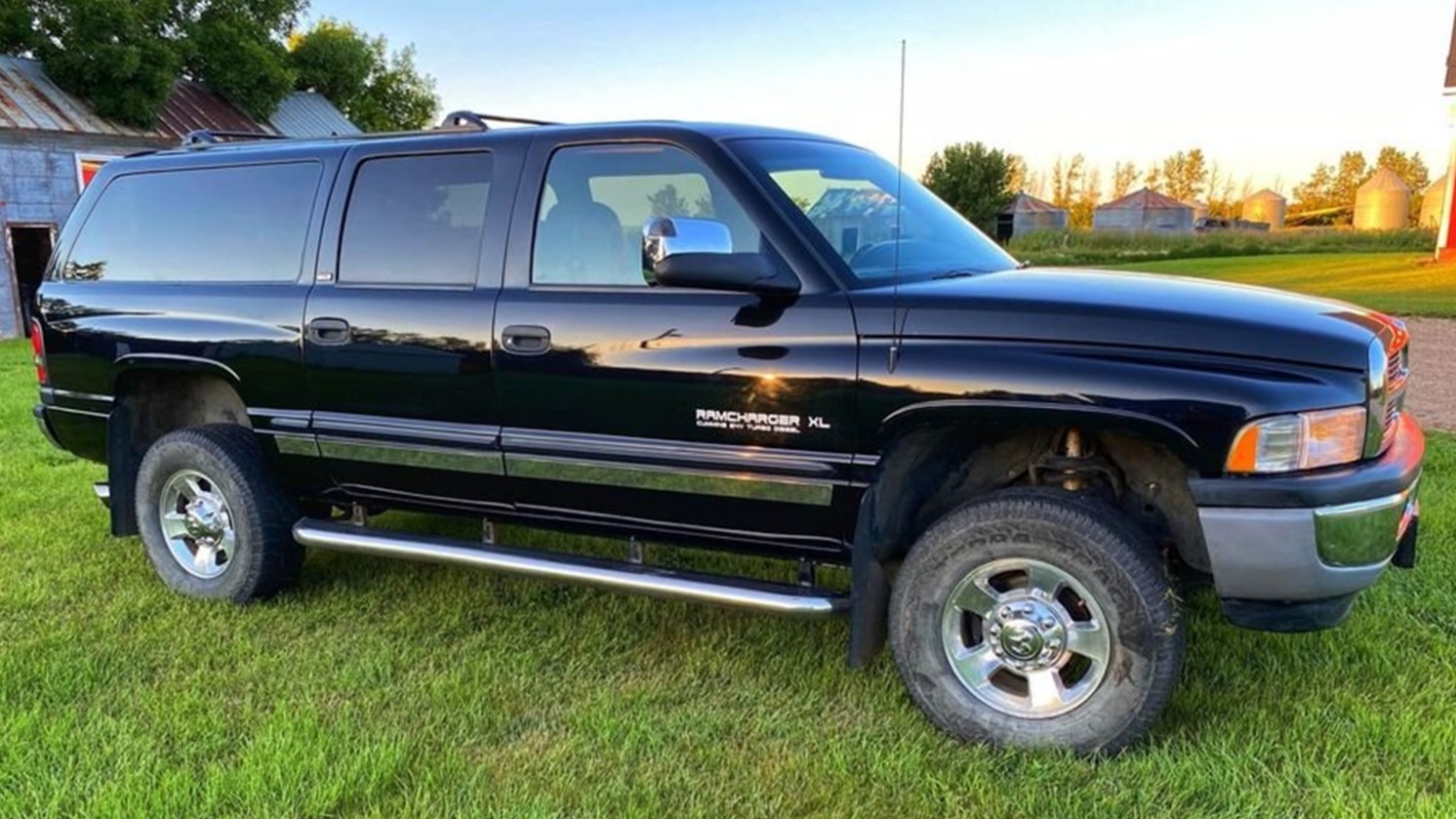
Other large Dodge Ram SUVs were built by Bayer Auto in Elrosa, Minnesota, and Custom Conversions in Cleburne, Texas. Even Dodge Mexico was in on the madness, crafting the Ram Charger, which was never sold north of the Mexican border. In the modern day, King Series makes the six-door super-sized Ford trucks that the Blue Oval itself does not.
 Facebook Marketplace Listing
Of course, America did get one comically large SUV in the form of the Ford Excursion, which shared its bones with the three-quarter-ton Super Duty pickup. Then there were a bunch of companies that turned even bigger medium-duty commercial trucks into what could only vaguely be considered to be pickup trucks.
Yet, most of these efforts pale in comparison to the madness that was Tropical Cabines. Based in Brazil, for decades, this company took already huge American trucks and turned them into colossal monuments of excess.
 Tropical CabinesCrew Cabs For Brazil
Like many weird custom shops, Tropical Cabines was formed out of a desire to fulfill a very specific corner of the vehicle market. According to Brazilian car history site Lexicar Brasil, Tropical Cabines launched in 1985 as a body shop and metal fabrication works. That year, farmer Ingo Appel approached the shop with a request to double the size of his Ford F-1000’s cab.
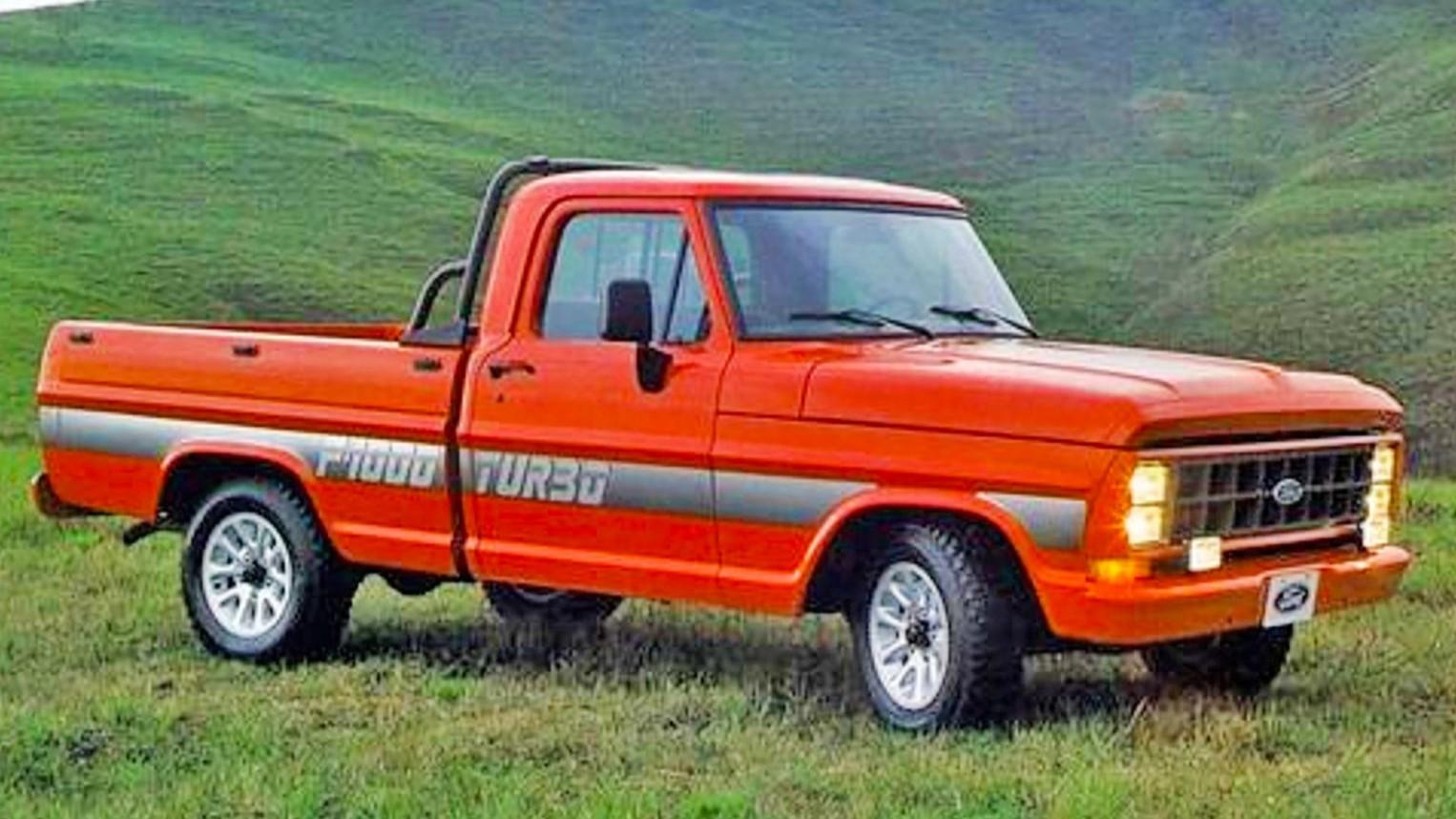
That name isn’t a typo; the Brazilian market Ford F-1000 was a truck that shared its bones with the fifth-generation F-250, and was available with a buffet of engines from a 272 cubic-inch V8 to an array of German diesels. The F-1000 was built from 1979 to 1998, lasting far longer than the fifth-generation F-Series did in America.
 Ford Brasil
Anyway, F-1000s came only in two-door configurations and only as rear-wheel-drive. So, if you wanted to carry a whole family with an F-1000, as Ingo Appel did, you had to ring up a customizer. Tropical Cabines would take regular-cab Brazilian Ford F-1000 and Chevrolet C-10 trucks, double the length of their cabs, and then add their own flair, like panoramic windows. All of this was initially done with custom metalwork.
Tropical Cabines says that in 1999, its facilities underwent a modernization process. The company would no longer rely solely on custom metalwork, and its fabricators would employ a heavy use of fiberglass. This coincided with the launch of the Ford Super Duty as a dedicated line of heavy-duty pickup trucks, which were sold in Brazil.
 Tropical Cabines
According to an archived version of the Tropical Cabines website, its new era of fiberglass builds was made possible through partnerships with fiberglass boat builder Tropical Náutica, fiberglass material supplier Tropical Fibras, and car dealership Tropical Veículos. Tropical Veículos had an interesting business model. If you already owned a regular cab truck and wanted a Tropical Cabines extra-large truck, you went to this dealership and traded your old truck for a Tropical Cabines rig.
This planted the seeds for some real madness.
The Kinds Of Giant Sedans, SUVs, And Trucks Detroit Won’t Sell You
 Tropical Cabines
In April 2000, Tropical Cabines decided to demonstrate what it could now do with fiberglass and converted a Ford F-250 Super Duty into a three-row, eight-passenger SUV called the Tropivan. It looks like a sort of like a Ford Excursion described over the phone.
In 2001, Tropical Cabines got really nutty and created a Ford F-250 sedan. The Tropiclassic was exactly as silly as it sounds. Tropical Cabines started with an F-250, then changed everything behind the B-pillar. Perhaps the weirdest part about a Tropical Cabines build was the fact that the company had a knack for grafting the rear ends of light-duty Ford models onto the backs of their trucks.
 Mercado Livre
The Tropiclassic was the recipient of the hind end of the Ford Focus. But since a Focus is neither as tall nor as wide as an F-250, Tropical Cabines had to make it bigger. That looks goofy enough, but the rear end retains the car’s original taillights, adding an extra dose of strange.
 Mercado Livre
But the result was incredible. The Tropiclassic was a gigantic “sedan” that could carry five people in insane comfort. Just look at the room that every rear seat passenger had!
 Mercado Livre
Sadly, while the Tropiclassic was based on the F-250, it did not get Ford and Navistar’s legendary 7.3-liter Power Stroke diesel V8. Instead, it had the option of a 3.9-liter Cummins B-series inline-four, or a 4.2-liter MWM (Motoren-Werke Mannheim) straight-six diesel. Like a proper rear-drive sport sedan, however, it did get a manual transmission! There was also an extended version of the Tropiclassic, in case big just wasn’t big enough.
 Mercado Livre
Tropical Cabines would go on to have an entire lineup of pickup trucks, SUVs, and sedans made larger than any manufacturer in Brazil was willing to sell. Most of these trucks were Fords, but some were Chevrolets, and one was even a Mercedes-Benz.
Going Even Bigger
In 2003, Tropical Cabines reached peak madness by launching the F-Maxx, which Tropical claimed was the largest pickup truck ever built in Brazil. This one was based on the medium-duty Ford Brazil F-12000 with the face of a Ford F-650 grafted on. The F-Maxx wasn’t just big for Brazil, either. If this thing were sold in America, it would have been bigger than anything but an F-650 Supertruck.
 Tropical Cabines
But unlike an American Supertruck, which keeps the lights of the donor truck, F-Maxx trucks had headlights from a light-duty Ford passenger car or truck.
Honestly, the F-Maxx would make any pickup made by Ford today look like a Honda Acty Kei truck in comparison. I find it deeply entertaining that some of the biggest American pickup trucks were actually built in Brazil.
 Tropical Cabines
According to a Brazilian car news publication, the last F-Maxx trucks, which were built around 2021, had onboard Wi-Fi for 55 devices, parking sensors, dual-zone climate, an upgraded sound system, headrest screens, three sunroofs, Ford Ranger headlights, and a 400 HP Cummins ISB 6.7-liter straight-six turbodiesel paired with a 10-speed automatic transmission. Occupants sat in six bucket seats wrapped in leather. Price? Somewhere around $300,000.
In 2008, Tropical Cabines branched out again. This time, it created something that would seem to be ripped right from the drawings of The Bishop. That year, it started taking imported Dodge Ram 2500 pickup trucks and converting them into nine-passenger wagons.
 Tropical Cabines
Amazingly, the Ram 2500 was so big that not only was there room for nine seats, but there was still enough space for a 55 cubic-foot trunk with the seats. That’s more trunk space than the Excursion had and more space than today’s SUVs with their rear seats up. Granted, that’s not incredibly surprising when you consider that the Ram 2500 Tropivan is based on a heavy-duty pickup truck.
 Tropical Cabines
Tropical Cabines continued to expand its lineup over the years. In 2010, Tropical claimed it became the largest and most modern company operating in the big truck market. By the mid-2010s, the company’s lineup spanned 20 models, and Tropical had claimed to have converted more than 9,000 vehicles. There was even a nine-passenger Ford F-250 called the Tropivan Executive that Tropical likened to being like a limo.
 OLX Listing
Despite all of these weird and wacky trucks, Tropical noted that a big focus was actually on building and servicing work vehicles. Sure, the Tropivan and the F-Maxx were great for Brazil’s wealthy and made international headlines, but the company’s real value was in making four-door and six-door work trucks that could haul an entire crew to a construction site.
An Artifact Of Brazil’s History
Sadly, the Tropical business came crashing down in 2019, but not for reasons within its control. Ford shuttered its São Bernardo do Campo truck plant that year, cutting off Tropical’s supply of trucks. Since Tropical was primarily a modifier of Ford trucks, this was bad news. By 2021, Tropical’s clock ran out and the company ceased operations. Tropical proudly proclaimed that it was the builder of Brazil’s biggest trucks right until the end.
 Tropical Cabines
Sadly, this means the reign of Tropical Cabines is over, and the world will no longer get to see big trucks turned into station wagons with the rear ends of Ford Edges. At the very least, a run of 36 years and over 9,000 units built is impressive for a company that makes such bizarre vehicles. Allegedly, at least 30 of those units were F-Maxx trucks, too.
The good news is that, if you can find an importer who knows how things work in Brazil, the bizarre Tropiclassic and early Tropivan are now legal to import into America. So, if you’ve had a hankering for the kind of Ford Excursion or Dodge Ramcharger-like SUV that Detroit was unwilling to build, maybe look to Brazil. I hope someone figures out how to get a Tropiclassic here just for the fun of it.
Top graphic image: Tropical Cabines