

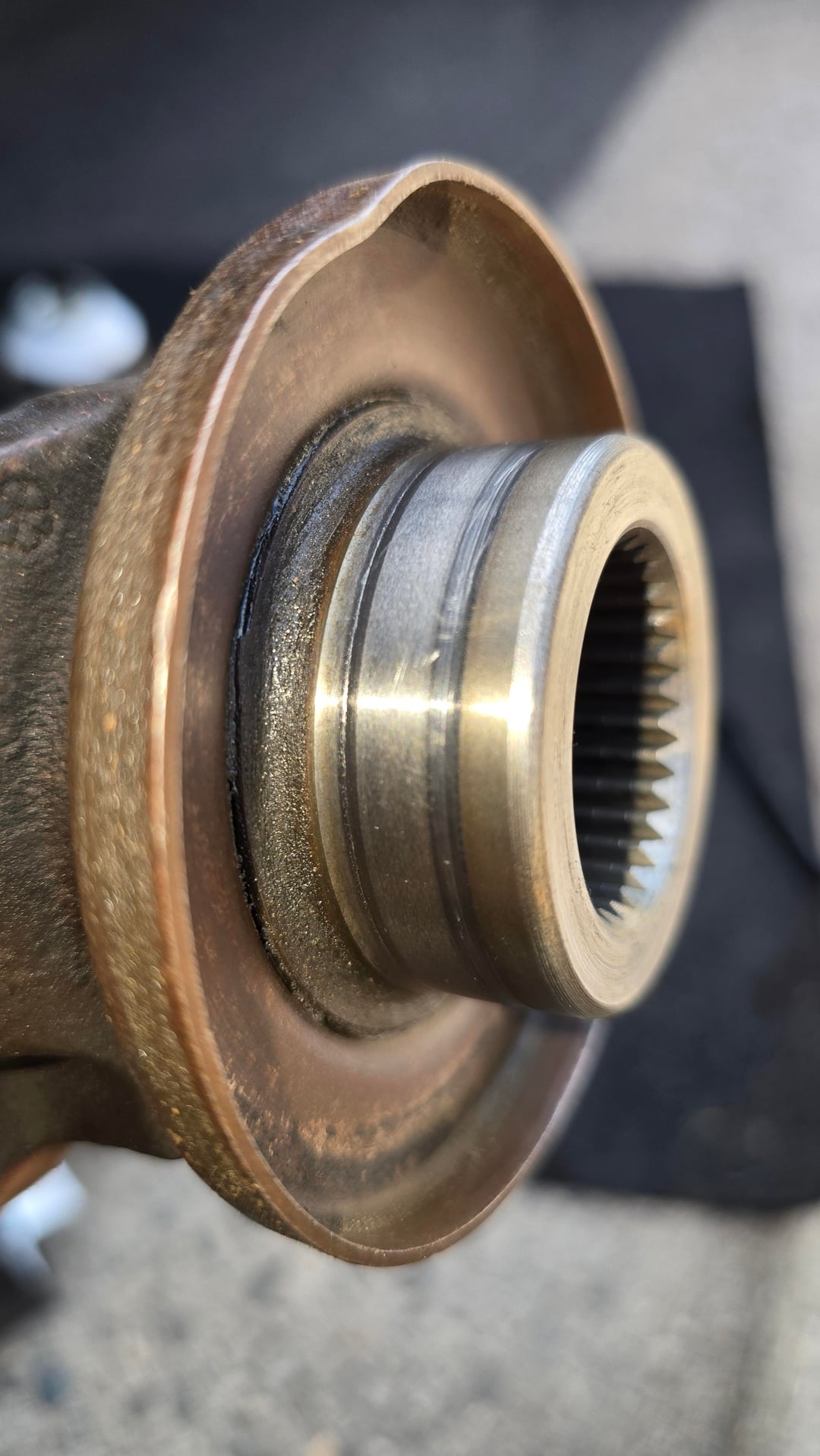


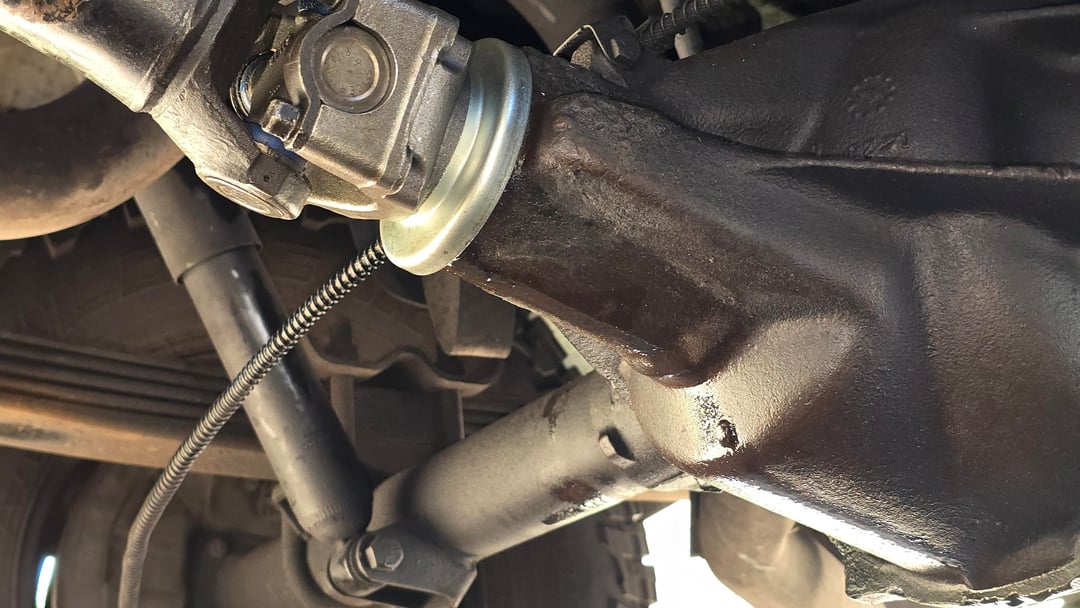
Essentially as the title says, was originally going to be the seal only though when me and the mobile tech did it, the old yoke as seen had considerable wear (that and noticable backlash/in and out play)
a new yoke was installed, went right in and the odd humming noise I used to hear when giving throttle went away.
(1990 Chevy 6.2L K5 Blazer at 300k miles, GM Corporate 10 Bolt, 3.73 gears)
For what its worth, he worked at GM for 23 or so years doing this type of work.
by DatGuyKilo
3 Comments
That oughta give you another 300k. 👍
Unrelated but was the hum a constant thing or was it only around 70km/hr?
A bit of a curious situation…
Backlash is adjusted by moving and changing the carrier (differential) side shims. Not by replacing an axle yoke or it’s seal.
“In/out” or as it’s called, Pinion Depth is adjusted by changing Pinion shims (different ID & OD from the carrier shims) that are placed at the base of the pinion gear during test fitment and/or reassembly.
Pinion pre-load is achieved by install the pinion nut (usually a new one during a rebuild or regearing) and then checking the actual rotation resistance (measured with an In/lbs Beam style Tq wrench) of the pinion against the ring gear and differential assembly.
There is of course a specification for how much (In/lbs) torque should be required to turn the assembly, be it all new bearings or all used bearings, just like there is different backlash specifications for a complete rebuild (all new bearings) or a reassembly utilizing used good bearings.
So the curious portion is not even so much of the “mechanic’s” credentials (“23” years at GM, which I’m not really sure what that means, is he a line Tech at a dealership or just some guy standing on an assembly line watching plastic door cards being installed by a robot🤷🏻♂️) but ***did he Mark your original pinion Nut location to the head of the pinion (where the threads begin/end)*** so as to know exactly where to stop when impacting the nut back on😉. That’s the most important part of a job like this (servicing not completely rebuilding) an axle assembly. This where/how Pinion Pre-load is set and Why marking is So critical.
Hopefully everything works out and the pinion pre-load is within spec of where it needs to be👍🏻