


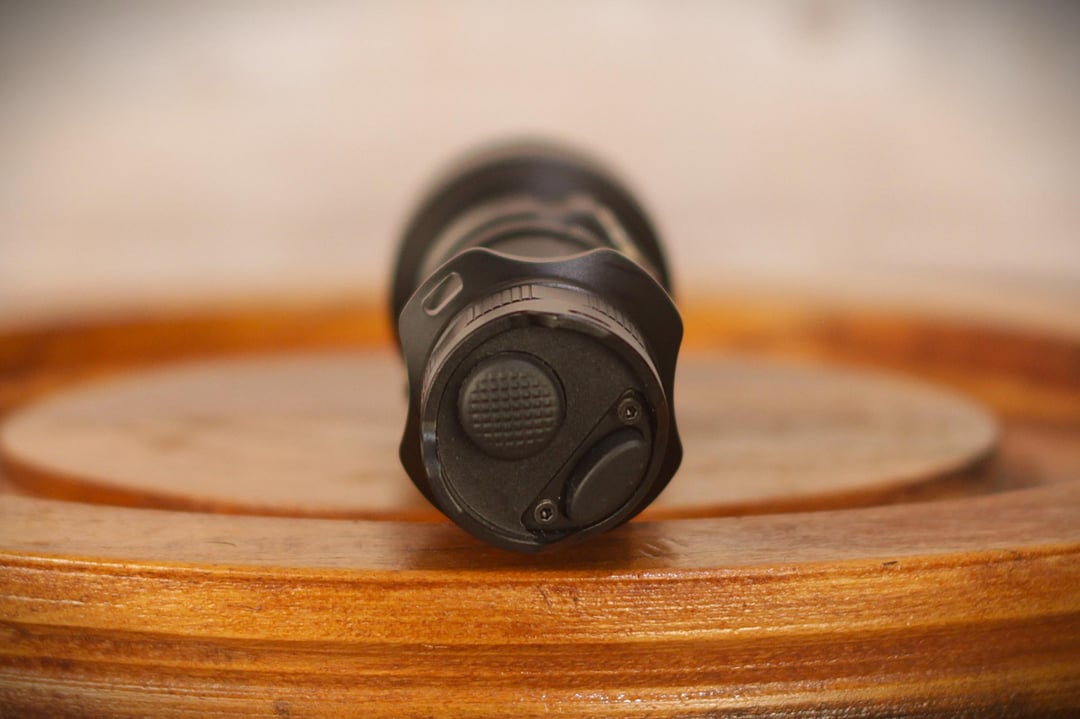




This is the Brinyte PT16A, a flashlight totally focused in tactical and law enforcement purposes. It has a Luminus SFT70.2 LED, constant current “boost” driver, tungsten pins on the bezel, tactical ring and a 3 button UI, with 2 tail switches. I received the “standard kit” with the flashlight, but there are also the “outdoor” and “tactical” kits, which come with extra accessories like gun mounting supports.
• Box contents [9th picture]
– PT16A
– Stainless-steel clip
– Tactical ring
– Lanyard
– USB-C charging cable
– 2x spare O-rings
– Instructions manual
• Conclusion:
The PT16A is a true tactical flashlight, it has essential features that make it really stand out as a great flashlight, especially for tactical uses. The build quality is pretty good, better than most flashlights I've already tested, it really feels high quality, the anodizing is pretty resistant as it's type III hard anodizing. The SFT70 is a perfect fit for what this flashlight means to be, it's very throwy, but still has a big hostpot and a lot of spill, the constant current Boost driver also guarantees a constant output and longer runtimes. I also liked the double tail switch UI, very practical for emergency and tactical uses, especially the instant Turbo and Strobe; the side e-switch on the other hand I think it's UI is a little confusing IMO, but very usable in outdoor and everyday uses.
Overall, I think this is the best tactical flashlight I've already tested, I feel I can really trust it to work when needed. There are some downsides as I will mention though, the mains ones being it isn't more impact resistant, 1m is a low rating for a fantastic tactical light like this. I personally believe the driver is potted (coated with resin), as the USB-C is, especially as it's meant to be attached to guns; and also the moonlight mode has around 5 lumens which, at least for me, it's too bright, moonlight modes should be 1 lumens or less in my honest opinion.
• Pros:
– Very hard and scratch resistant type III anodizing
– Efficient Boost driver
– USB-C is potted to prevent water going inside the flashlight
– The bezel is reinforced and has tungsten pins for breaking glass
– Scratch resistant lens
– AUX green LED to find the flashlight in the dark
– Easy operation with one hand and Strobe/Turbo
• Cons:
– The flashlight can’t tail stand
– The side e-switch auto lockout can be kind of annoying sometimes
– Moonlight mode too bright (5 lumens)
– Impact resistance rating is only 1m
• Price
The price of the PT16A standard kit is currently $109.95 on Brinyte official website. (not affiliated link)
• Body and build quality
Colors/Material Options: The Brinyte PT16A is currently only available in aluminum with black anodizing.
Material: The main body is made of A6061-T6 aluminum allow with type III hard anodizing; the tail switches are covered by silicone caps, the bezel has 3 tungsten pins, the clip is made of black coated stainless-steel and the tactical ring is made of a pretty hard plastic.
Main body: The main body feels very high quality, the type III anodizing really helps with that, it feels very comfortable in the hands and everything feels really high quality. The tactical ring is made of plastic but feels very solid, it really helps with the grip on the flashlight, this is very important as this is a flashlight to be used on harsh environments with water, sand and everything you can imagine, also on situations of high stress it’s very good to have more grip on an important tool as a flashlight.
Threads: The tail threads are squared and are not anodized, but there is an inner aluminum ring that is what actually makes contact with the tail cap buttons.
Clip: The clip seems to be good, but it has nothing special. It is made of black coated stainless-steel; it comes pre-installed and there is no other position for it to be installed.
Tail stand and rolling: The flashlight does not tail stand; the rubber tail switch is higher than the protection ring around it. It does not roll around easily though, the tactical ring and clip prevent it from rolling.
AUX lights: There is one AUX LED on this flashlight, it's located on the side button and serves as a battery indicator, lock and charging indicator, it also lights up green when the flashlight is not in use for some time to help find it in the dark. [10th Picture]
Buttons: This flashlight is a true tactical light, and it has 3 buttons for different purposes: the side e-switch for outdoor and everyday use, it locks after the light is not used after some time to prevent accidental activations; the main tail switch that always turns the flashlight ON in "turbo" and the secondary tiny tail button that when pressed if the light is OFF goes to "strobe" mode, if the flashlight was already ON it will cycle between the modes. The tail switches are covered by rubber caps, the side e-switch is covered by a metal button and is fixed on the tail cap by two hex screws.
Battery contact: The flashlight makes contact with the battery by 2 gold-coated springs, this makes the flashlight more resistant to impacts, and protects the battery and the driver, as the spring will absorb a lot of the impact. [11th Picture]
Bezel: One of the coolest, and most important, features of the PT16A is the bezel. It's like a classic stainless-steel tactical bezel but it has 3 tungsten pins! The pins are very useful for breaking glass. They are a feature that makes this flashlight really stand out as a tactical flashlight. [12th Picture]
Water Resistance: It features IPX8 water resistance and seems to be very well sealed, I see no gaps for water to go inside this flashlight easily. I loved the USB-C silicone cover design, it's one of the best I’ve seen, it's hard to open by accident and very hidden on the flashlight body, like a silicone cap should be; it is kind of thin, but this is no problem as the USB-C is potted (coated with resin) and will not allow water inside the flashlight.
Impact resistance: The flashlight is rated to endure a drop of 1m, it's a very strange rating as the flashlight is meant to be very resistant and attached to guns. I personally believe the driver is potted, it would be really strange to make the USB-C coated with resin and not the driver also. And the flashlight seems it could endure much more than 1m.
Here is a size comparison with 2 other flashlights the Convoy M21A on the left and the Sofirn SK30 on the right [13th Picture]
• Weight and size
Weight:
-Without battery: 147.8g
-With battery: 220.7g
-Battery weight: 73.0g
Size: 160.0mm (length) x 39.4mm (head diameter) x 29.2mm (tail diameter) (tail diameter on the tactical ring = 38.9mm)
-Battery size: 21.3mm (diameter) x 74.5mm (height) (protected cell)
• Battery, runtime, and charging
Battery: The PT16A is powered by a single 21700 battery, the package comes with one Brinyte branded 21700 cell, it seems to be a protected cell and it's 4.5mm longer than other cells I have. It is also possible to use 18650 and CR123A batteries, but I recommend getting an adapter to avoid these batteries rattling inside the tube. [14th Picture]
Battery Indicator: The side e-switch on the body has a LED to serve as a battery indicator.
Charging: The PT16A has USB-C charging on the main body, and it can also accept cells with USB-C, as it comes with a 4mm longer battery it will also accept the longer cells with USB-C. [15th Picture]
• Modes, Runtimes, Throw, Candela
Modes: It has 4 main brightness modes, "moonlight" with 5 lumens, "medium" with 120 lumens, "high" with 900 lumens, and "turbo" with 3000 lumens.
Advertised specs:
| Modes | Brightness(Lumens) | Distance(meters) | Runtime(minutes/hours) |
|---|---|---|---|
| Turbo | 3000-600 lumens | 458m | 1min-135min (2h15min) |
| High | 900 lumens | – | 230min (3h50min) |
| Medium | 120 lumens | – | 1200min (20h) |
| Low | 5 lumens | – | 18000min (300h) |
Throw: This flashlight is certainly on the throwy side, it has a well-defined hotspot that throws far, Brinyte advertises it can reach up to 458m and 52500 candelas of distance, all this while having a compact reflector and head.
• Emitter, reflector and CRI:
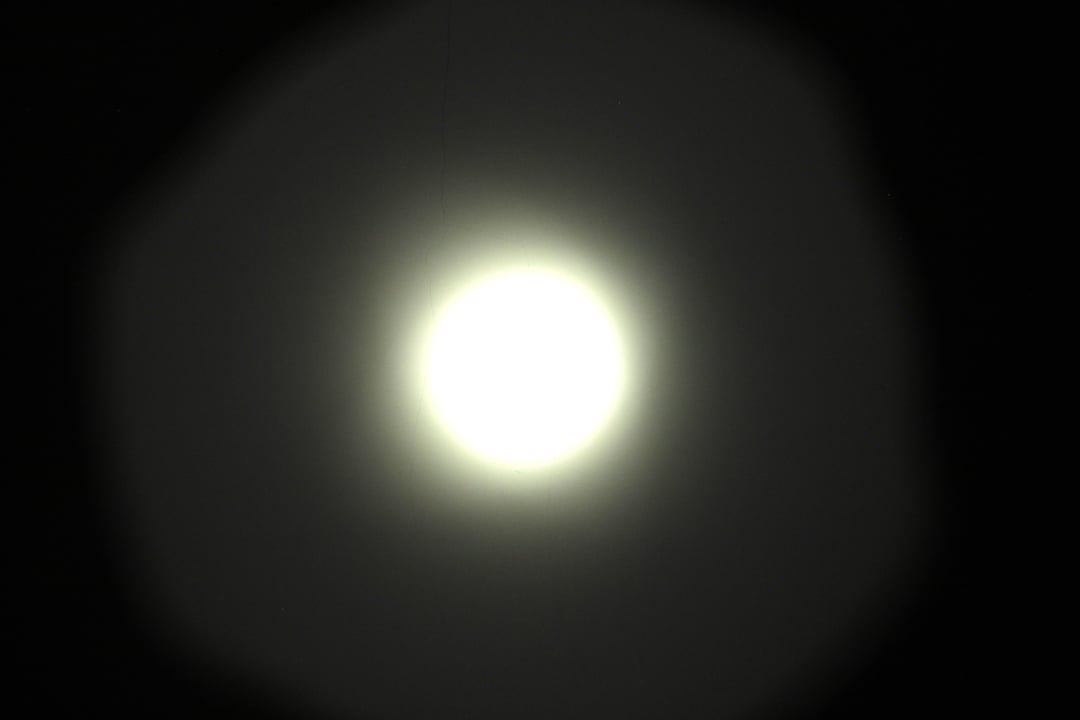
Emitter: Brinyte does not state which LED the PT16A uses, they only say it's a Luminus LED, but I am certain it is the SFT70 gen 2 in 6500K because the LED PCB has “SFT70” written on it. I didn't notice any green tint at all; it has a nice overall tint and beam, I didn't notice much green or yellow tint at all, very neutral tint, at higher brightness it has a blueish tint, like most cool white emitters. I think this LED is very suitable for a tactical flashlight, it’s very bright and produces a very nice tight blinding hotspot. [16th Picture]
Lens: The lens is anti-reflexive coated and seem to have some kind of scratch resistant coating!
Reflector/TIR: It features a smooth medium reflector, that makes the beam throwy.
Beam profile: The beam has a very throwy pattern with a well-defined hotspot and some spill. I didn't notice any green tint. The beam is not the cleanest and has some noticeable artifacts, this is due to the SFT70 having 4 individual emitting surfaces, instead of a single one, but you can really only see it if you look at it pretty close distance, and it does not impact on the use of the flashlight. [17th Picture]
CRI: The 6500K SFT70 have around 70 CRI, for a tactical flashlight CRI is not the most important thing, and trading the CRI for more efficiency and runtime makes sense on the PT16A.
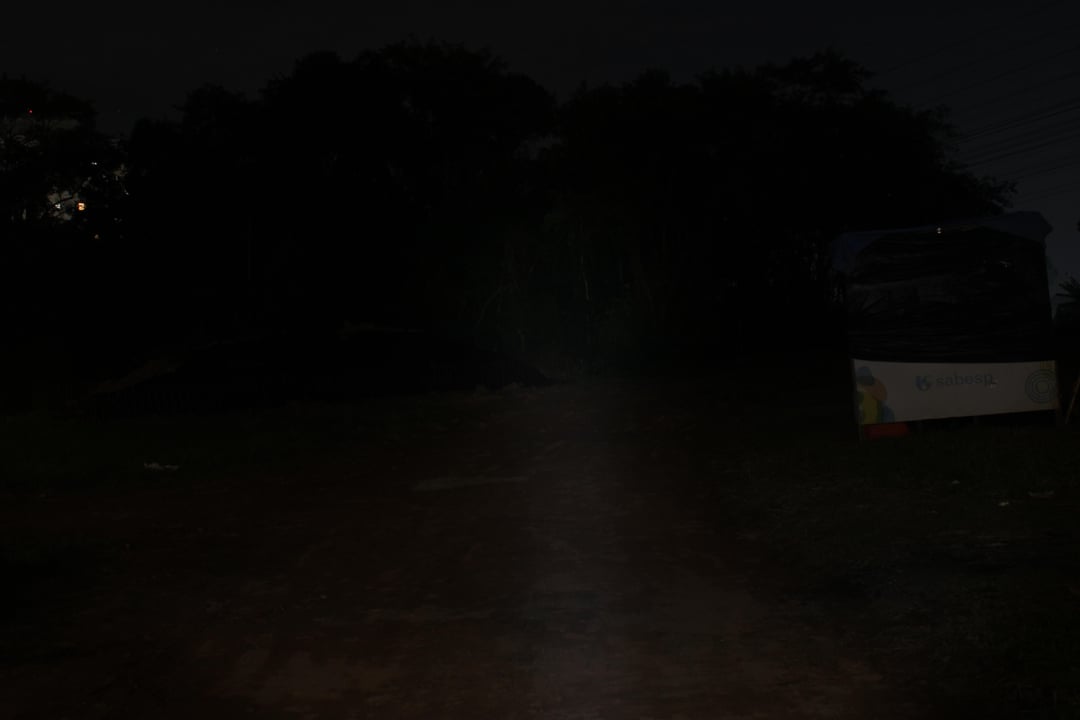
• Beamshots Camera settings:
– 24mm lens 2" F8 ISO400
I apologize because it was a little foggy when I did the beamshots, so the visibility is a little lower than expected.
– The trees at the back are around 100m distance, I could measure with more precise tools so now I have a more precise distance.
[18th picture] – PT16A Turbo (3000 lumens)
[19th picture] – PT16A High (900 lumens)
[20th picture] – PT16A Medium (120 lumens)
I always try to match what my eyes can see on the beamshots, so camera settings may vary.
• Driver and UI
Driver: The PT16A features a constant current "Boost" driver, with built in USB-C charging. For this reason, it maintains a constant output until the battery is almost empty. No flickering or PWM on this flashlight!
UI: This flashlight has a very tactical focused UI. I think the side e-switch UI is kind of confusing, but it can be because I am not very used to this type of tactical UI.
The side e-switch is used to operate the flashlight like an outdoor flashlight, but the e-switch gets locked when the flashlight is not being used for a while and you have to unlock by clicking it 3 times; when it's not locked clicking it will turn it ON, while it's ON holding it turns it OFF and clicking while it's ON cycles between modes; by holding it when it's OFF and not locked it will go into "moonlight" mode. The bigger tail button always turns goes to "turbo" mode. The smaller tail button can be used to access strobe when the flashlight is OFF, or it can be used to cycle between modes if the flashlight is already on.
Low Voltage Warning: Yes, and the flashlight will power OFF when the battery voltage is too low to preserve battery.
Reverse Polarity Protection: Yes.
Thermal Regulation: The thermal regulation is fully automatic; the flashlight reduces the brightness when reaching high temperatures to avoid damaging the components. The thermals and heat transfer on this flashlight seem to be pretty efficient and even on “Turbo” mode, with 3000 lumens, you can use it around a minute before it steps down.
Lockout: It features lockout and automatic lockout on the side e-switch, it automatically locks when the flashlight is not in use for some minutes to prevent accidental activations. The tail switch can be locked by slightly untwitsting the tail cap, this will make the tail switches lock, but the side e-switch will remain working; this happens because the flashlight actually makes contact on the tail cap by the threads and also by an inner aluminum tube that only makes contact with the gold plated ring on the tail switches, so untwisting the tail cap will block the path between the tail switches and the driver, only the threads will remain connected.
Turbo: The “turbo” on this flashlight is very bright, with 3000 lumens, the flashlight gets hot fast, as expected, and last around 1 to 2 minutes before stepping down to avoid LED and driver damage.
Moonlight: This flashlight, sadly, has no real “Moonlight” mode. The so called “moonlight” mode on this flashlight has 5 lumens, which is too bright to be a real moonlight mode. “Moonlight” modes should have less than 2 lumens IMO. But the 5 lumens mode is by no means bad, and is really useful if you don’t want to blind yourself while trying to use it close to you.
Blinkies: I already commented this flashlight has instant access to “Strobe” on the secondary smaller tail button, but this flashlight also features “SOS” mode! To access “SOS” you need to turn the flashlight ON with the e-switch, then double press it, this will make it go to the “Strobe” mode, then you double click again and it will be on “SOS” mode.
A special thanks to Brinyte for sending this flashlight for me to review!
*I am not being paid to do this review, everything here is my honest opinion.
Thank you for reading my review <3
by LMP-Br
1 Comment
We have this and love it.