
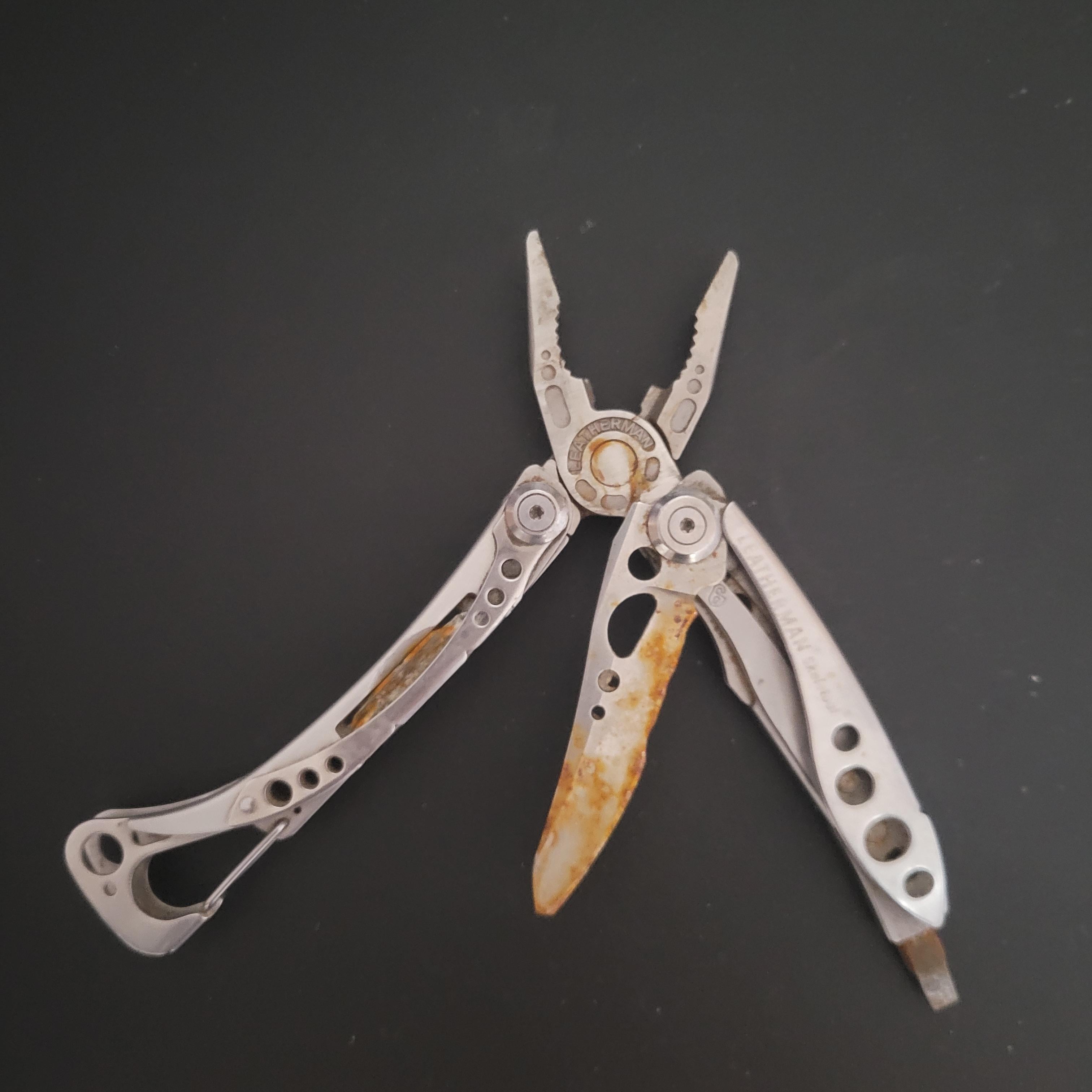
Hello toolies and leatherheads, it’s a good day! I found an abandoned skeltool and would like a sanity check on how I should repair it.
For background, this is my first leatherman, I’m usually a Gerber person because given the prices and and amount of use my tools get, I never was able to justify a leatherman purchase. With that said, I’ve disassembled some gerber folding knives to replace parts with good success, and in general I’m decently handy.
What I’m planning is as follows:
Disassemble the tool, soak it in anti rust (I’ve never done that step so advice on de-rusting is most welcome), and then try sharpening the blade, and then reassemble using 3 in 1 in the joints
I just need help in 2 steps:
First, any advice for de-rusting would be appreciated
Second, is there any replacement for the blade that I can use, cause I want to be able to take it into theaters and places like that without being stopped for having a knife
Thanks all
by definitely_real_
10 Comments
They have a lifetime warranty; I’d email leatherman with that picture and ask what they’ll do for you
I had this exact skeletool and broke the pliers. Sent them in and they gave me a credit to use at their store. Got a new skeletool for like $10 (with the credit) and the old one was like 8 or more years old.
Assuming you’ve decided to tackle this yourself there are a few things to note/be careful of. First would probably be getting the plier pivots off, you’ll need two torx screwdrivers and it will probably take a few tries to get everything held in place properly. It helps if you have a friend for this step but I managed on my own. If further disassembly is required there are a few pins that need to be drilled/filled off, they can be replaced with pins or you can use M2 bolts and nuts although they do stick out more.
As for replacing the blade I did it on mine however it required drilling through hardened steel and I had to use a carbide end mill to actually get it to fit right so not something that’s especially easy. There might be other options but I’m not sure exactly what would fit since I can’t find my measurements anymore.
https://www.reddit.com/r/Leatherman/s/3itXzBmOq4
If warranty is not an option, I think you just have to remove the bits and soak them in an anti rust solution. A little rubbing would help. The rust on your skeletool doesnt look like it completely destroyed the tool. Looks superficial and easy to get rid off.
Am I the only one that thought that was blood and OP just posted a murder weapon?
Just soak it in white vinegar, wipe it down, oil it a little and you’re done
The rust is superficial so some WD-40 and wire brush will handle it. Carb/Brake clearer could also handle it. I’d only do the teardown if you really want too, getting the layers apart and back together require some above average tools.
You can take the knife out and use shims to fill the gap but honestly the blade is too small to get you in trouble unless you’re going through an actual “security” check with a metal detector. Typically I put it into a bag with a security or stash pocket for those cases. You could cannibalize another tool as well and use a can opener there.
Step 1, go to leatherman.com, fill out the form, get a packing slip, print label, ship it out wait 2 weeks, NEW MUTITOOL
Send it to leatherman
Since you have indicated you plan to disassemble and remove rust, and this isn’t a “collection quality” restore;
1. Remove bits and then use a non-metallic brush and hot water and soap, or windex and remove all oil, grease, and dirt from tool. Try to have a brush that can reach into the crevices. If tool is disassembled, it’s much easier.
2. Soak tool in a chelation agent such as evapo-rust for 24 hours (don’t use this on black oxide tools or tools that have oxide printed logos, it will remove any and all oxides. Judging from the photo it looks like the logo is already faded from a previous corrosion control soak or buffing). About half way through soak, agitate jar or container so that parts move around to ensure agent is exposed to all surfaces.
3. After at least 24 hours of soak time, remove tool from chelation agent and rinse off tool thoroughly in tap water. This is important so that you remove any unseen oxide molecules that may be stuck to tool otherwise they will seed rust growth where left behind.
4. Inspect tool for any black carbon spots or areas and wipe away, or lightly steel wool away if required. (Re-rinse if you used steel wool)
4. Dry tool as much as possible and apply light oil such as WD-40 with abandon. I completely submerge and agitate in WD-40.
5. Reassemble with original parts, or include replacement parts if necessary.
6. Perform regular maintenance and corrosion control (monthly, bi-monthly etc as required) on the tool for the rest of its life in your service.