
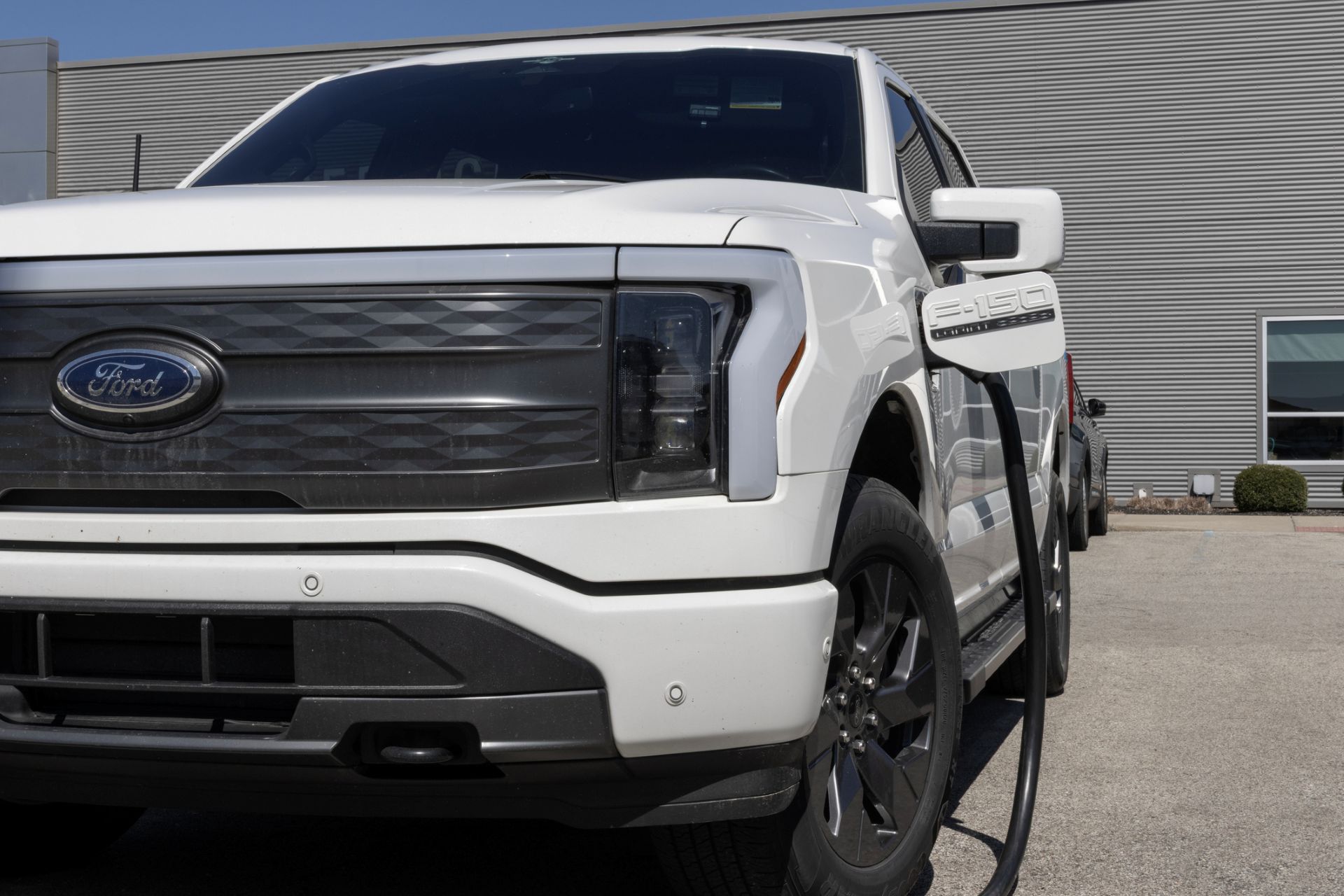
During a 106-hour-long power outage, one Ford F-150 Lightning owner said their truck’s battery helped keep a fridge, freezer, TVs, lights, and a mini AC going through the blackout.
By the end of the outage, the battery’s juice had only dropped from 99% to 35%.
Here’s what to know
The EV owner took to Reddit’s r/F150Lightning community to share their story.
According to the original poster, their truck powered a mix of household devices, including a tankless water heater, espresso machine, toaster oven, TVs, lights, a mini AC, plus a fridge and freezer. Comparing it with a previous storm, the OP wrote, “We used a generator last hurricane (Sally) and this was so much less annoying. Set it and forget it.”
As for how the truck was hooked up, the OP answered a question by saying, “Just extension cords.” In the comments section, they added that they bought one 30-amp cord for the wheeled AC unit and used standard extension cords for everything else.
For one commenter, the story was encouraging because a weeklong outage had recently convinced them they needed enough backup power to keep their furnace running.
A different commenter used a gas-electric F-150 PowerBoost as a comparison point, saying they ran “most of my house for 3 days” after a big storm. They said the first time involved extension cords everywhere, but later they had an electrician help add a generator lock-out kit and a 30-amp external input.
Other commenters described more dedicated arrangements, including a 120-volt subpanel for essentials only and inlet-and-interlock systems for selected circuits. Those more targeted installations can make backup power easier to use while helping households manage heavier loads such as AC units, fridges, and cooking appliances.
Across the discussion, commenters focused as much on connection method as battery size, including planning for essentials only, using 30-amp inputs, and limiting high-draw devices when heating or cooling equipment was running.
Clearly, though, even without a full vehicle-to-home installation, a large battery can help keep food cold, lights on, and a room comfortable through a multi-day outage while avoiding the fuel-heavy inconvenience of a standalone generator.
More background
Adding battery storage can protect a home during outages while helping lower energy costs and giving households more independence from the grid.
If you need more guidance about your options, EnergySage can help you compare home battery storage choices, including competitive installation estimates. EnergySage has teamed up with electrification brand Qmerit to help homeowners get the best price on home battery storage solutions.
And for people who want backup power without depending on a truck, Pila offers another option. Pila’s plug-and-play batteries are priced at a fraction of what a whole-home backup system would cost, allowing you to protect individual appliances, like refrigerators.
Where can I learn more?
These stories take a closer look at how electric vehicles and batteries can help keep homes running during outages.
• Another Ford F-150 Lightning owner powered home essentials through two days of winter outages.
• Ford is offering free bidirectional EV chargers to make home backup simpler.
• GM says its EVs could power homes in blackouts, though installation costs worry owners.
Get TCD’s free newsletters for easy tips, smart advice, and a chance to earn $5,000 toward home upgrades. To see more stories like this one, change your Google preferences here.
