
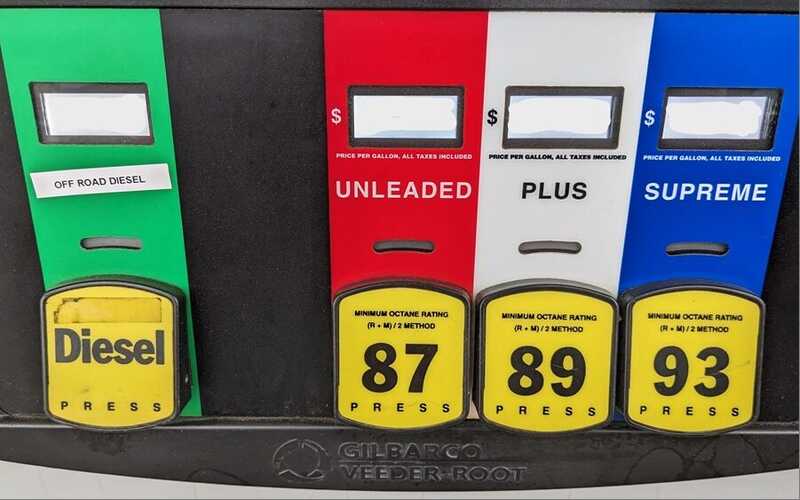
CHAMBERSBURG – President Donald Trump has signed an executive order temporarily expanding access to tax-exempt red-dyed diesel, a move intended to provide relief to truckers, farmers and other diesel users facing sharply higher fuel costs.
Trump signed the order Monday night during a rally in Grand Island, Nebraska.
The order waives the federal requirement that dyed diesel be used only for off-road purposes and directs the Treasury Department to defer the federal excise tax on on-road use of dyed diesel through the end of 2026, without interest or penalties.
Red-dyed diesel is chemically the same as conventional diesel but is dyed red to indicate that it is generally intended for tax-exempt off-road uses, such as agricultural and construction equipment. The federal diesel tax is currently 24.4 cents per gallon.
Attorney Clint Barkdoll said, “Currently, red dye diesel, which is tax exempt from federal and state taxes, is only available for like farm equipment. Trump is saying you can now just go buy that for your vehicles on the road.”
The White House says the federal tax deferral could save about $60 on a 250-gallon fill, although the total savings would depend on whether individual states also suspend or refund their fuel taxes.
The move comes as diesel prices have surged amid disruptions to global fuel supplies.
Diesel prices have been affected by the conflict involving Iran, attacks and outages at refineries and continuing shortages of refined petroleum products. The national average price for diesel reached about $6.50 per gallon last month.
Lowering taxes may not solve the underlying supply problem.
Barkdoll pointed out, “Already this morning, I see Goldman Sachs has a note out saying this is not going to fix the long-term structural problems with diesel supply.”
Goldman Sachs has previously warned that the market for refined products such as diesel remains particularly tight, with reduced supplies coming from the Persian Gulf, Russia and China. The firm has pointed to refinery disruptions and other supply constraints as significant factors affecting the diesel market.
The international supply situation remains unsettled. The Group of Seven, an international intergovernmental economic and political organization, recently agreed to release 100 million barrels of crude oil and fuel from emergency reserves in an effort to address shortages and high prices. The International Energy Agency is expected to work out details of that release later this month.
Barkdoll said Goldman Sachs is expecting elevated gasoline and diesel prices to persist into 2027 because of the global supply situation.
“So we’ll see what comes out of that,” Barkdoll said.
For truckers and other diesel users, the executive order could provide some short-term relief at the pump. But the longer-term price outlook will depend largely on whether global supplies of refined fuels recover.