
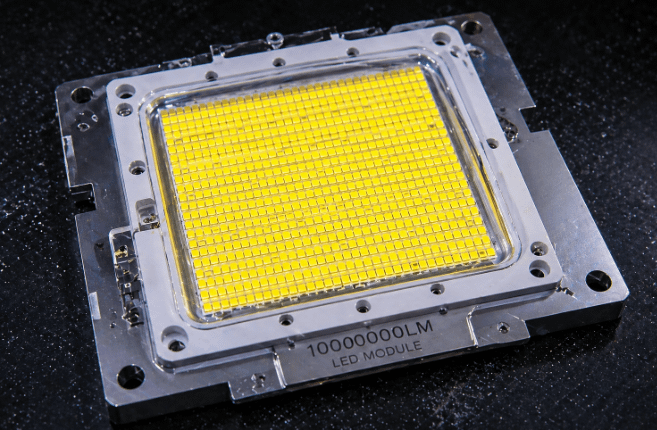
Lately, this flashlight hobby has honestly started feeling like I've hit a serious "impotence" phase. Back in the day, every time a new emitter dropped, I couldn't help but order it immediately to play around. Swapping things in and out always gave me that fresh buzz. But now? Completely different story. New lights that come out are just the same old familiar faces over and over. I've pretty much been through all the mainstream emitters already — some of them multiple times. I've got several lights with the same emitter just in different reflector sizes. Off-the-shelf stuff just isn't surprising me anymore.
The most obvious thing is that LED performance and efficiency gains have slowed way the hell down. Sure, the new generation of emitters does have some improvements in brightness and efficiency compared to the last ones, but it's almost always incremental — nowhere near that "one generation completely crushing the last" kind of jaw-dropping experience. For example, going from the SFT40 to the SFT42 is technically an upgrade, but in actual use it's damn near impossible to get that "holy shit, this is a whole new ballgame" feeling. After playing with so many lights, these baby steps just can't spark that intense urge to buy or get me excited anymore. It's nothing like the feeling I got the first time I ever fired up a decent flashlight. I need a bigger hit — more raw brightness — just to squeeze out some dopamine.
So here's what I want to know: given where we're at with current mainstream LED materials and packaging tech, roughly how many more years until we see a new generation that can truly, massively, absolutely obliterate the stuff we have now — like the SFT40, SFT42, XHP70.3 HI, SBT90.2 and their ilk? Are we looking at a clear leap in 3-5 years, or is this more of a 7-10 year (or even longer) waiting game?
And thinking further: if we set aside any breakthroughs in battery and thermal management tech for a moment, are we basically already butting up against a physical or engineering wall with just the existing LED materials and packaging? Is a truly massive performance jump even possible anymore, or are we stuck? Is the near future just gonna be "fine-tuning" hell — endlessly tweaking phosphor recipes, improving chip uniformity, optimizing electrode designs, and other tiny details — all just to squeeze out small, steady bumps in specs rather than chasing any kind of revolutionary leap?
If we really want a huge jump in efficiency and raw brightness, are we absolutely forced to wait for entirely new luminescent materials or major packaging breakthroughs, like novel chip structures, way better thermal management, and next-level optics?
Spent way too long typing this, deleted a ton, edited a bunch. Huge thanks to anyone who actually read this far. Would seriously appreciate some insight from the real nerds who've studied this stuff.
by Minimum_Quote_6532
3 Comments
There are theoretical limits. To generate a perfect 5800k white, you literally cannot go above 250lm/w without breaking physics.
Well, 350lm/w if you’re willing to sacrifice some light quality. However, you’re dealing with inefficencies of the real life. Losses from the blue emitter. Inevitable losses from the phosphors.
I don’t think there is gonna be any massive jump in current technology, more of fine tuning and optimization of what we have
It’s similar in CPUs, there hasn’t really been any massive improvement in some time, it’s just incremental steps
We will be seeing this happen in more and more technologies
I don’t think there will be any large jump without a new emitter material or an improvement related technology, indirectly allowing for more powerful emitters (like heat transfer)
Every brand overdrives current LEDs. For example Convoy M21K LHP73B can sustain higher brightness if only it used higher efficiency LED/underdrived it. Higher modes are about 100lm/w or less, but that can be **almost** doubled by using NV1010
Technology exists, nobody really uses it