
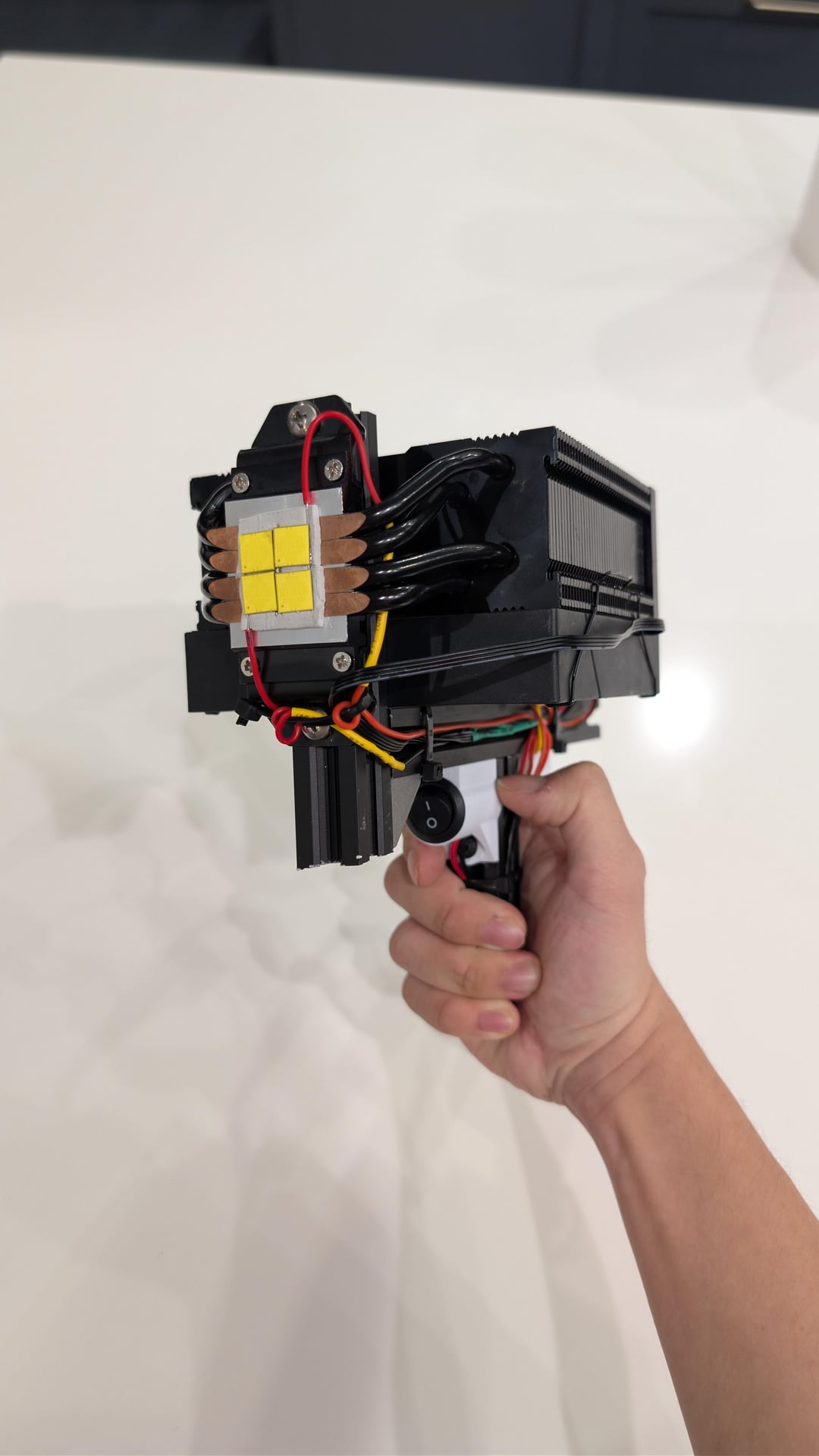
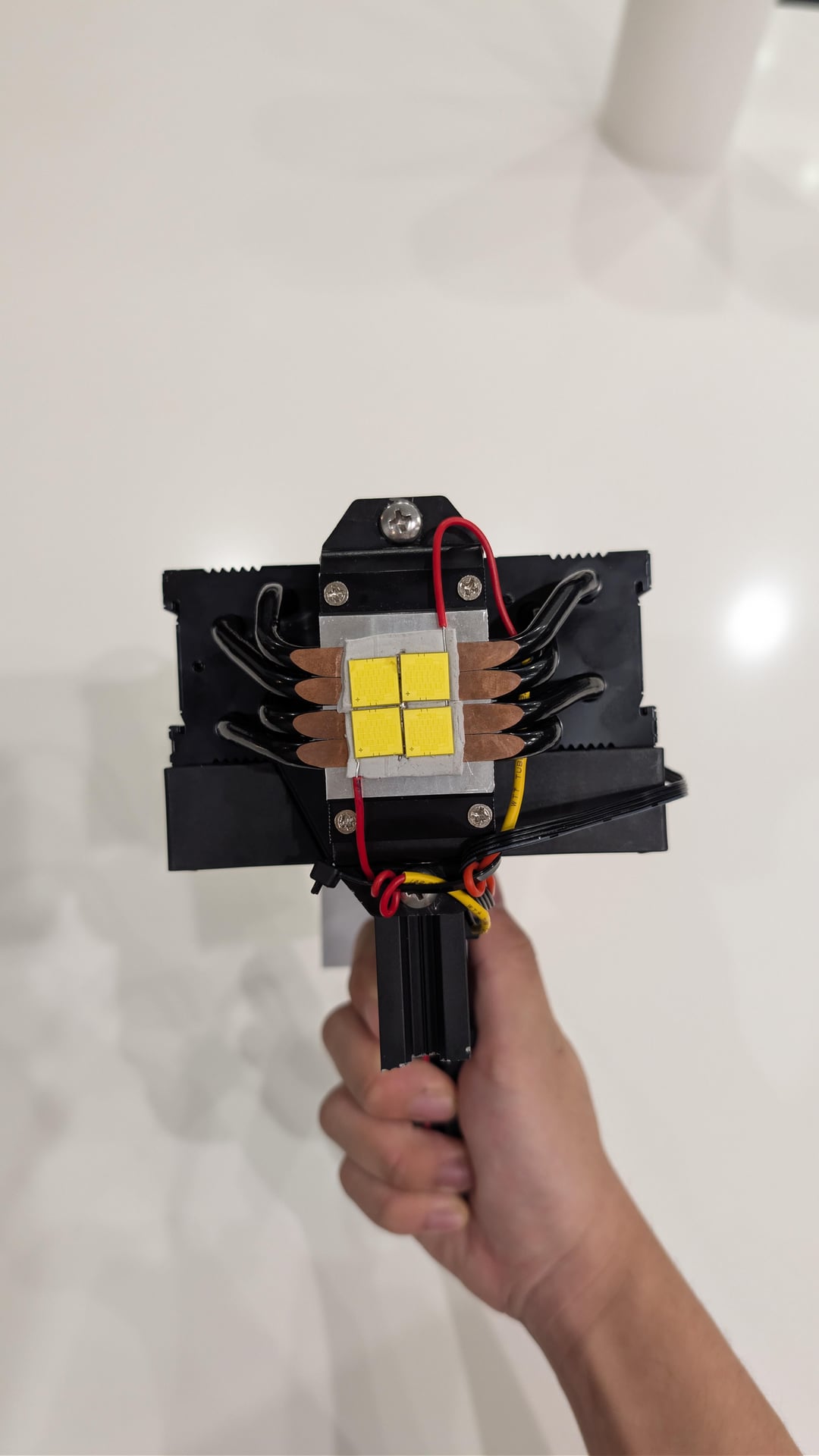
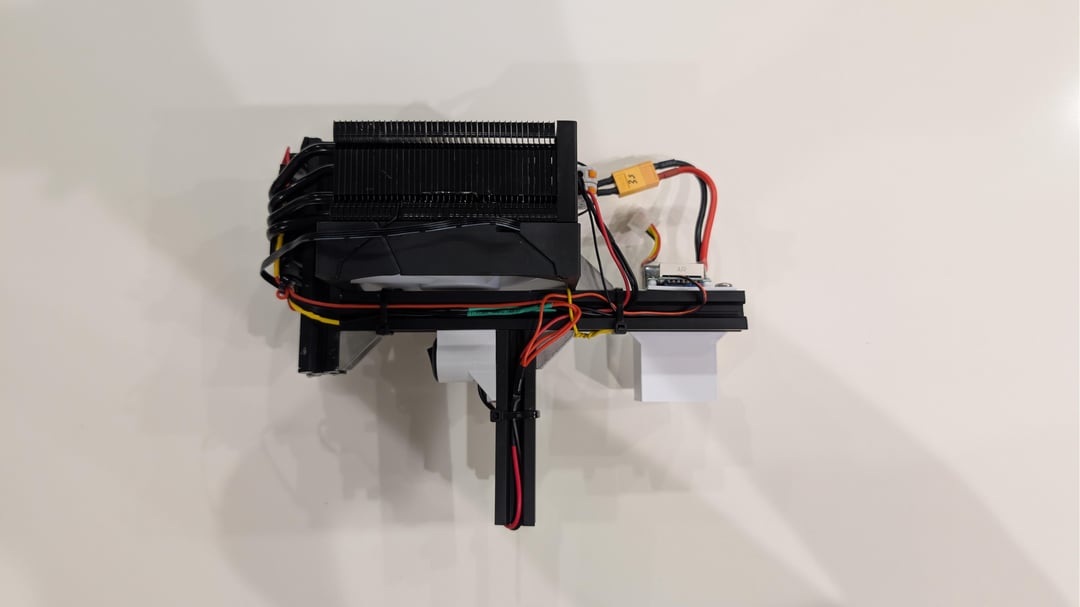
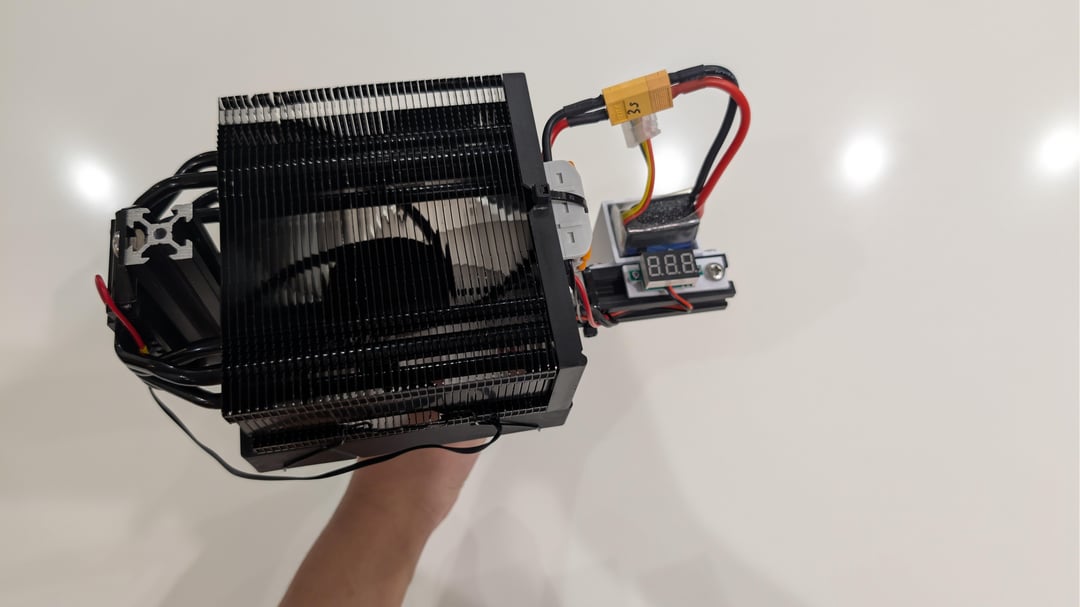
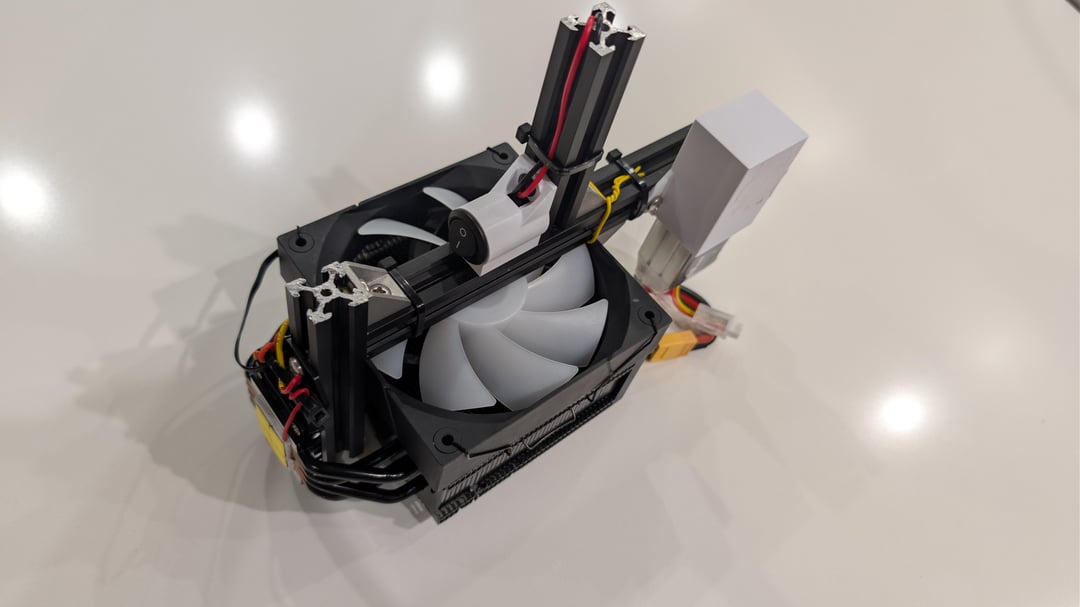
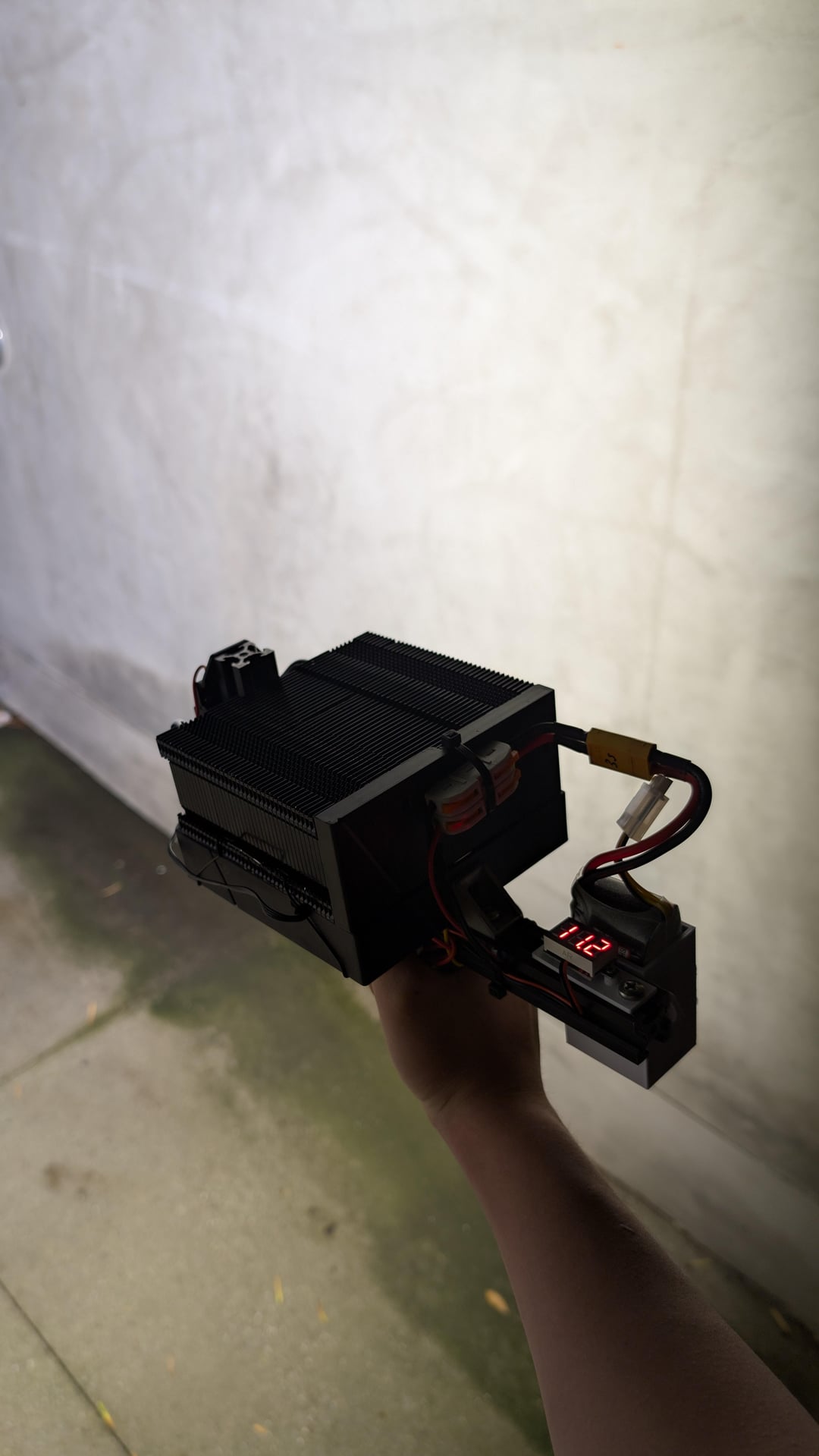
I put this thing together pretty quickly with almost every part being something I had just laying around. The actual LED is four Cree XFL12K HI 5000k. Cooling is super overkill for how I’m running it right now: it’s a cpu cooler from a junk pc with a 120mm fan. The frame is 2020 aluminum extrusion bracketed together. Other parts are include a digital voltmeter for determining charge, and a 3d printed trigger and battery holder. The LEDs are meant to be reflow soldered to a copper core PCB. Since I can’t do that, I used solid-core wire soldered to the tiny pads on the back of the chip. Then I attached the leds to the heatsink using a soft thermal pad that conforms to the wires.
The wiring is super simple. I’m running two pairs of LEDs in series. The light output depends on the current, which depends on the voltage. Currently I’m using a 3S lipo (11.1v), so each LED gets only 5.55v. Based on the datasheet (page 32), that’s barely 4A or 75% of typical, 0.755480lm4leds=16440lm approximately. If I switched to a 4S battery (14.8v), which I don’t have right now, each LED would get 7.4v, 24A, and output about 320% of typical lumens: 3.25840lm4leds=about 70000lm. However, overdriving the LEDs causes efficiency to dive off a cliff. At 5.55v4A, each LED draws 22.2W, at 7.4V24A, each LED draws an astounding 177W. That's 4.27x the light output, but 8x the power draw. That excess power gets turned into heat, hence the giant heatsink/cooler. Of course, the most efficient point is at the manufacturer suggested 5.7v, 5.6A, 5480lm. This is why high-lumen flashlights use more LEDs instead of driving them at a higher voltage. I would add another four LEDs, but I’m already beyond the typical current rating for the 20AWG wiring I’m using.
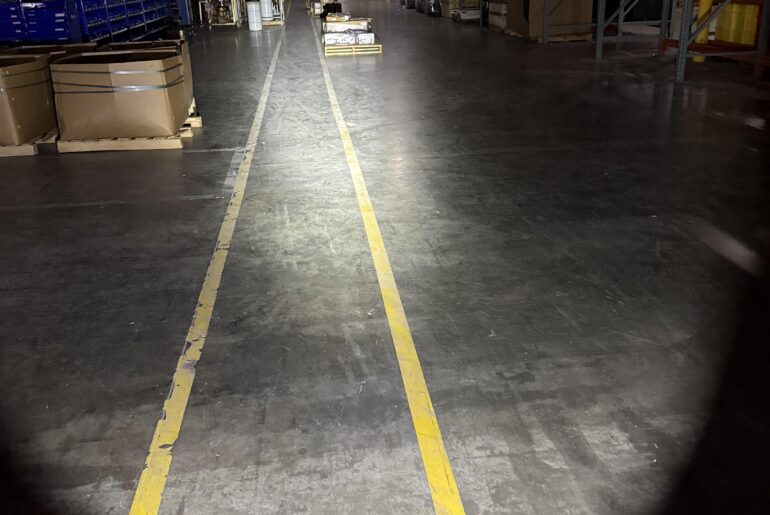
Tl; dr: Lumens: 16500 continuous, Candela: ¯\_(ツ)_/¯ . Cool little project, learned a lot about lights.
by LOSERS_ONLY

1 Comment
Perfect EDC,